VICE PRESIDENTS OF RUSSIA
Vice Presidents of Russia: An Overview
The office of Vice President of Russia played a key role during the early years of the Russian Federation but existed only for a brief period. It served as the second-highest executive position, acting as a deputy to the President and helping ensure continuity of governance in the newly independent state after the Soviet Union dissolved in 1991.
LIST OF VICE PRESIDENTS OF RUSSIA
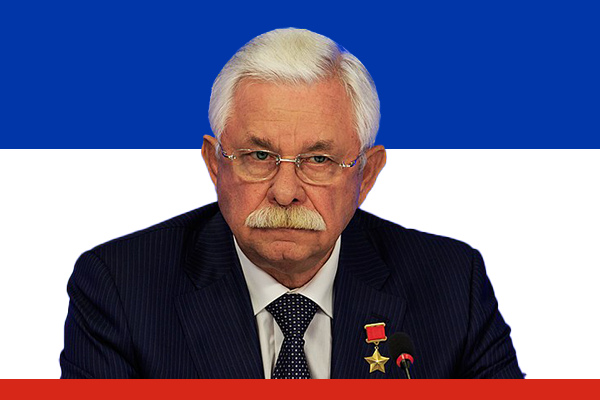
Vice Presidents of Russia
Creation of the Office
The position of Vice President of Russia was established under the 1991 Constitution of the Russian Federation. Its primary purpose was to assist the President in governing the country, participate in key policy decisions, and assume presidential powers if the President was unable to perform duties due to illness, resignation, or other circumstances.
Only Vice President: Alexander Rutskoy
Alexander Rutskoy became the only Vice President of Russia. He assumed office on July 10, 1991, serving under President Boris Yeltsin. Rutskoy had a distinguished career as a military pilot and actively participated in Russian politics, representing a strong voice in the new federal government.
As Vice President, Rutskoy actively advised the President, worked on economic and political reforms, and participated in discussions about the country’s transition from a Soviet system to a democratic federation. His role involved coordination with ministries, policy evaluation, and supporting Yeltsin’s vision for Russia’s political and economic transformation.
Crisis and Abolition
The office of Vice President faced its most critical test during the 1993 constitutional crisis. Rutskoy openly opposed President Yeltsin’s actions when Yeltsin attempted to dissolve the Russian parliament. The conflict escalated into an armed confrontation in Moscow, during which Rutskoy declared himself acting president. The standoff ended when Yeltsin’s forces regained control, and Rutskoy was arrested.
Following this crisis, the 1993 Constitution of the Russian Federation abolished the office of Vice President. Russia chose to replace the position with other mechanisms for presidential succession, including the appointment of a Prime Minister and constitutional provisions outlining the transfer of powers in emergencies.
Legacy
Although short-lived, the office of Vice President of Russia played a significant role in the early years of the Russian Federation. It highlighted the challenges of establishing a stable government during a period of major political and economic change. Rutskoy’s tenure remains a notable example of the complexities involved in balancing executive power in a newly democratic Russia.
The abolition of the vice presidency demonstrated Russia’s shift toward a more centralized executive system, leaving the Prime Minister and other constitutional structures to manage succession and continuity of governance.