Mr. Wilopo
In Office: 3 April 1952 – 30 July 1953
Political Party: Indonesian National Party
Home State: Purworejo Regency
Lifespan: 1908–1981
Country: Indonesia
Image credits available here.
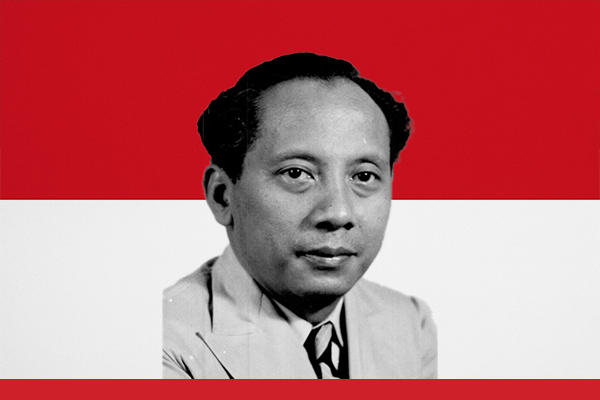
Early Life and Education
Wilopo was born on October 21, 1909, in Purworejo, Central Java, during the Dutch colonial era. He came from a modest Javanese family that valued education and discipline. After completing his early schooling in Java, Wilopo pursued higher education at the Rechtshoogeschool (Law School) in Batavia, now Jakarta. His academic background in law gave him a deep understanding of justice, governance, and the importance of democratic values.
Political Beginnings
Wilopo began his political journey as a member of the nationalist movement that sought independence from Dutch colonial rule. He joined the Indonesian National Party (PNI), which became one of the major political forces in the struggle for independence. As a young nationalist, Wilopo participated in debates and campaigns that promoted unity among Indonesians from different backgrounds. His eloquence and moderate views earned him respect among both politicians and intellectuals.
Rise in Government
After Indonesia achieved independence in 1945, Wilopo took part in shaping the new nation’s political direction. He served in several governmental roles, demonstrating strong administrative and negotiation skills. He worked closely with other nationalist leaders, including Sukarno and Mohammad Hatta, to stabilize Indonesia’s post-colonial governance. His dedication to reform and his ability to mediate between opposing groups made him an ideal candidate for higher office.
Appointment as Prime Minister
President Sukarno appointed Wilopo as Prime Minister on April 3, 1952. His appointment came during a period of intense political instability and economic challenges. Wilopo inherited a fragile parliamentary system and an economy struggling with inflation, limited industrialization, and social unrest. He recognized the urgent need for effective reforms and a more disciplined administration.
Economic and Political Reforms
As Prime Minister, Wilopo emphasized the importance of financial discipline and agricultural development. He introduced measures to reduce government spending and stabilize the national currency. He encouraged local production and sought to reduce dependence on imports. On the political front, Wilopo advocated for cooperation among parties to strengthen Indonesia’s parliamentary democracy. He believed that unity among political factions was essential for national progress.
Wilopo also promoted rural development and education as tools for national transformation. He prioritized improving the lives of farmers, expanding access to schooling, and empowering local communities. His practical approach to governance reflected his deep concern for ordinary Indonesians.
Challenges and the Wilopo Cabinet Crisis
Despite his efforts, Wilopo’s administration faced serious challenges. Political divisions within the parliament and increasing military dissatisfaction led to tensions. The “Wilopo Cabinet Crisis” of 1952 emerged when disagreements arose over army reorganization. When soldiers protested in Jakarta, the situation escalated into a major political confrontation.
Wilopo responded with caution and diplomacy, trying to prevent violence and restore order. However, the crisis weakened his government’s authority and exposed deep divisions between civilian politicians and the military. Unable to maintain parliamentary support, Wilopo resigned from office on June 3, 1953.
Later Contributions and Legacy
After his resignation, Wilopo continued to serve Indonesia in various capacities. He chaired several government commissions and participated in the Constituent Assembly. He remained committed to national unity and democratic governance throughout his life.
Wilopo became known for his honesty, modesty, and dedication to reform. He represented a generation of leaders who prioritized integrity over personal ambition. His balanced approach to politics, emphasizing both economic discipline and social justice, left a lasting impression on Indonesia’s early democratic history.
He passed away on May 31, 1981, leaving behind a legacy of service, principle, and patriotism.
Conclusion
Prime Minister Wilopo played a vital role in shaping Indonesia’s early democratic era. Through his reformist vision, economic prudence, and commitment to unity, he guided the nation during one of its most turbulent times. His leadership reflected a blend of pragmatism and idealism that continues to inspire Indonesia’s political tradition.