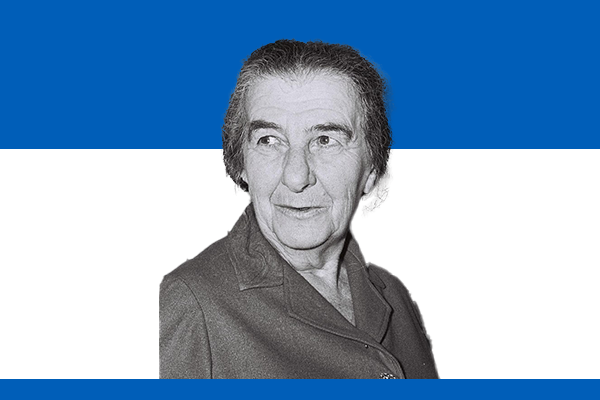
Early Life and Foundations of Leadership
Golda Meir was born on May 3, 1898, in Kyiv, where she grew up amid poverty and antisemitic attacks. She moved with her family to the United States in her childhood, and she completed her schooling in Milwaukee. She developed a strong commitment to Zionism as a teenager, and she began advocating for a Jewish homeland with determination and clarity. Her early activism strengthened her leadership skills, and she built the confidence that later defined her political style.
In 1921, she moved to Mandatory Palestine with her husband, Morris Meyerson, and she began working in a kibbutz. She embraced communal life, and she actively participated in labor organizations. Her dedication to the collective spirit of Zionism brought her closer to national leaders, and she soon stepped into significant political roles.
Rise in the Zionist Movement and Government Leadership
Golda Meir advanced quickly in the Histadrut, Israel’s powerful labor union. She negotiated labor rights, built support networks, and helped shape the nation’s labor policies. She joined the Jewish Agency and traveled across the world to collect support for the Zionist cause. Her passionate speeches convinced international audiences, and she raised crucial funds for the Jewish community in Palestine.
When Israel declared independence in 1948, she signed the Declaration of Independence and became one of the state’s founding pillars. Prime Minister David Ben-Gurion appointed her as the nation’s first Ambassador to the Soviet Union. She worked tirelessly to strengthen diplomatic relations and secure Jewish emigration rights.
Later, she served as Minister of Labour, where she built housing, infrastructure, and welfare programs. She then became Israel’s Foreign Minister in 1956 and represented Israel with firmness and moral conviction on the global stage.
Prime Minister of Israel
In March 1969, Golda Meir became Israel’s fourth Prime Minister and the nation’s first—and so far only—female to hold the position. She led the country during a period marked by both security challenges and diplomatic shifts. She took a direct, uncompromising approach to international negotiations, and she tried to balance Israel’s security concerns with its desire for peace.
Her leadership faced its greatest test during the Yom Kippur War in 1973. Arab forces launched a surprise attack, and Israel suffered heavy losses in the early days of the conflict. Meir immediately mobilized international support, including crucial assistance from the United States. She stood before the Israeli public with honesty about the crisis and reassured them even when the situation seemed dire. Her government managed to turn the tide of the war, but the heavy casualties raised public criticism.
She accepted responsibility for the government’s failures in preparedness, and she resigned in 1974. Even after stepping down, she remained an influential voice in Israeli politics and global Jewish affairs.
Personality, Leadership Style, and Global Impact
Golda Meir led with a mix of toughness and maternal warmth. She preferred simple clothing, lived modestly, and held meetings in her kitchen over tea and cigarettes. She believed in direct communication and rarely hesitated to express her opinions. World leaders respected her clarity, moral courage, and strong will.
Her influence extended beyond Israel. She inspired women around the world by showing that leadership in a male-dominated environment was possible. She encouraged education, self-reliance, and national unity, and she dedicated her life to the survival and progress of the Jewish people.
Legacy
Golda Meir died in 1978, but her legacy continues to shape Israel’s history. She symbolizes determination, resilience, and national spirit. Her journey from an immigrant girl in Eastern Europe to Israel’s Prime Minister illustrates how conviction and perseverance can change a nation’s destiny.