NORTH KOREA
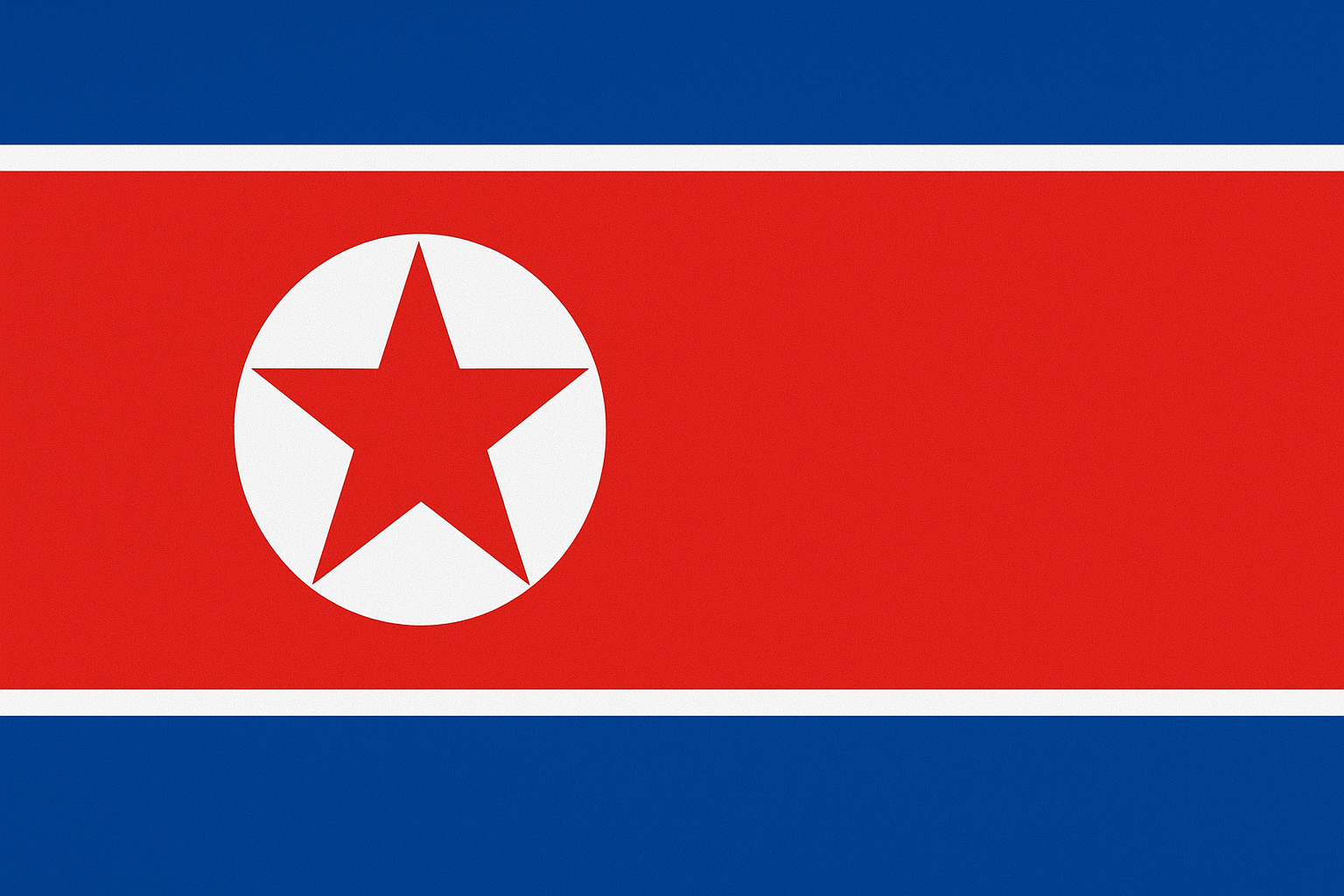
North Korea Flag
The flag of North Korea, officially known as the Democratic People’s Republic of Korea, features a central red stripe symbolizing revolution and patriotism. This red band is bordered by thin white stripes, representing purity and unity, and wider blue stripes at the top and bottom, symbolizing sovereignty, peace, and friendship. On the hoist side, a white circle contains a red five-pointed star, which stands for socialism, guidance of the ruling party, and the struggle of the people.
Introduction
North Korea, officially known as the Democratic People’s Republic of Korea (DPRK), is one of the most secretive and isolated countries in the world. Located in East Asia, it occupies the northern half of the Korean Peninsula and shares borders with China, Russia, and South Korea. Since its formation in 1948, North Korea has followed a unique political, economic, and social path that has drawn continuous global attention.
Historical Background
After the end of Japanese colonial rule in 1945, Korea was divided into two zones along the 38th parallel. The northern region came under Soviet influence, leading to the establishment of North Korea in 1948 under Kim Il-sung. The Korean War (1950–1953) deeply shaped the country’s identity, leaving the peninsula divided and technically still at war. The conflict reinforced North Korea’s focus on military strength and national security.
Political System
North Korea operates as a one-party socialist state, led by the Workers’ Party of Korea. Power has remained within the Kim family for three generations—Kim Il-sung, Kim Jong-il, and the current leader, Kim Jong-un. The political ideology of Juche, which emphasizes self-reliance, independence, and loyalty to leadership, plays a central role in governance and daily life. The state tightly controls political expression, media, and public activities.
Economy and Society
The North Korean economy is largely state-controlled, with heavy emphasis on industry, mining, and military production. International sanctions, limited trade, and internal challenges have restricted economic growth. Agriculture remains crucial but faces difficulties due to terrain, climate, and resource shortages. Social life is highly regulated, with education and employment closely linked to political loyalty and family background.
Military and Nuclear Program
North Korea maintains one of the largest standing armies in the world. The military is a core pillar of the state under the “Songun” or military-first policy. The country’s nuclear weapons and missile programs have significantly increased tensions with neighboring countries and the international community. These programs are viewed by North Korea as essential for national defense and regime survival.
Culture and Daily Life
North Korean culture promotes patriotism, discipline, and reverence for leadership. Art, music, and literature often carry political themes. While daily life is challenging for many citizens, community activities and state-organized events play an important role in social cohesion. Access to outside information is extremely limited.
Conclusion
North Korea remains a nation defined by isolation, strong leadership control, and strategic resilience. Its history, political structure, and security policies continue to shape its role on the global stage, making it one of the most closely watched countries in international affairs.