Phetsarath Ratanavongsa
Reign: 12 October 1945 – 24 April 1946
Home State: Luang Prabang
Lifespan: 1945–1946
Country: Laos
Image credits available here.
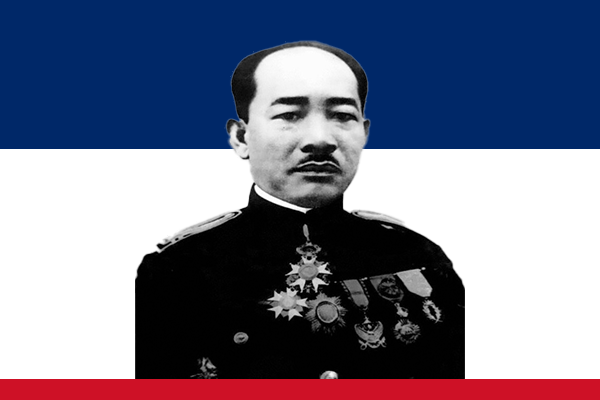
Early Life and Education
Phetsarath Ratanavongsa was born in 1890 into the Lao royal family in Luang Prabang. As a member of the aristocracy, he received elite education, including formal training in France. His exposure to Western administrative systems deeply influenced his political thinking and governance style. Upon returning to Laos, he entered public service under French colonial administration, where he steadily rose through the ranks due to his competence and reform-oriented mindset.
Role in Colonial Administration
Before becoming Prime Minister, Phetsarath served as the highest-ranking Lao official within the French colonial system. He worked to modernize governance by promoting standardized laws, central administration, and greater Lao participation in decision-making. Unlike many colonial-era officials, he sought to strengthen Lao identity rather than merely administer colonial policy. His reforms laid the groundwork for a unified national structure in a country long divided by regional power centers.
Leadership During World War II
The Second World War marked a turning point in Phetsarath’s political career. As French authority weakened in Indochina, he became a leading voice for autonomy and independence. In 1945, following Japan’s surrender, he supported the declaration of Lao independence and became Prime Minister of the provisional government. This government aimed to establish Laos as a sovereign nation free from colonial rule.
Prime Ministership and Political Vision
Phetsarath’s time as Prime Minister was short-lived due to the return of French forces later in 1945. Despite its brevity, his leadership was significant. He envisioned a unified, independent Laos governed by modern institutions while preserving cultural traditions. His policies emphasized national unity, resistance to external domination, and the development of a centralized state authority. Although his government lacked military strength, its ideological impact was lasting.
Exile and Continued Influence
After the collapse of the provisional government, Phetsarath went into exile in Thailand. Even in exile, he remained an important symbol of Lao nationalism. He became associated with the Lao Issara (Free Laos) movement, which continued to oppose French control. While political realities eventually shifted, his ideas influenced later independence leaders and movements that culminated in Laos achieving full sovereignty.
Legacy and Historical Importance
Phetsarath Ratanavongsa is often regarded as the “father of Lao nationalism.” His efforts helped awaken national consciousness and laid intellectual foundations for independence. Unlike revolutionary figures who relied on armed struggle, his approach emphasized administrative reform, legal structure, and political legitimacy. Today, he is remembered as a visionary leader whose commitment to independence shaped the course of Lao history.
Conclusion
Although his tenure as Prime Minister was brief, Phetsarath Ratanavongsa’s impact on Laos was enduring. His leadership during a critical historical moment, combined with his dedication to reform and national unity, secured his place as one of Laos’s most respected statesmen. His life represents the early struggle of Laos to define itself as a modern, independent nation.