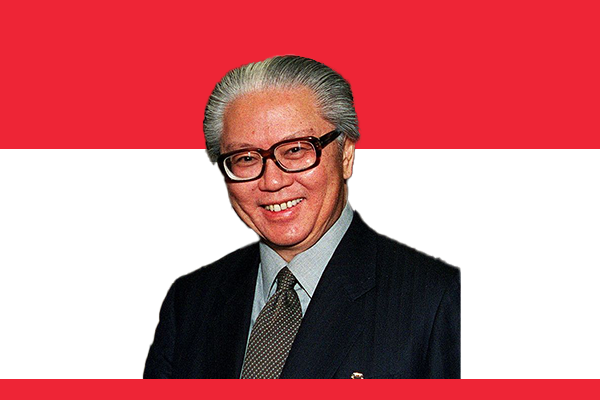
Early Life and Academic Background
Born on 7 February 1940, Tony Tan displayed academic excellence from a young age. He studied at the University of Singapore before pursuing higher education in the United States, where he earned a doctorate in applied mathematics. His strong academic foundation influenced his analytical approach to governance and policy-making. Before entering full-time politics, he also gained experience in the private sector and academia, which helped him bridge the gap between economic theory and practical administration.
Entry into Politics
Tony Tan entered Singapore politics in 1979 when he was elected as a Member of Parliament. His intellectual reputation and administrative skills quickly set him apart. Over the years, he held several important cabinet positions, including Minister for Education, Minister for Finance, and Minister for Trade and Industry. These roles prepared him well for the responsibilities he would later shoulder as Deputy Prime Minister.
Role as Deputy Prime Minister
In 1995, Tony Tan was appointed Deputy Prime Minister, serving alongside Prime Minister Goh Chok Tong. As Deputy Prime Minister, he was deeply involved in coordinating economic policy, strengthening Singapore’s global competitiveness, and ensuring long-term financial stability. His leadership style was marked by careful planning, data-driven decisions, and a strong emphasis on sustainability.
Contributions to Economic Development
One of Tony Tan’s most significant contributions as Deputy Prime Minister was his focus on transforming Singapore into a knowledge-based economy. He supported innovation, research, and development to reduce dependence on traditional industries. Under his leadership, Singapore expanded its financial sector, strengthened its position as a regional business hub, and invested heavily in science and technology. His economic vision helped Singapore remain resilient during periods of global uncertainty.
Impact on Education and Research
Tony Tan had a deep and lasting influence on Singapore’s education system. Even during his tenure as Deputy Prime Minister, he continued to advocate for education reform, emphasizing creativity, critical thinking, and lifelong learning. He supported the expansion of universities and research institutions, laying the groundwork for Singapore’s reputation as a center for academic excellence and innovation.
Leadership Style and Public Image
Known for his quiet confidence and integrity, Tony Tan earned respect across political and social circles. He was not a flamboyant speaker, but his thoughtful and measured approach inspired trust. Colleagues often described him as disciplined, principled, and deeply committed to public service. His leadership reflected Singapore’s broader values of meritocracy, pragmatism, and long-term planning.
Legacy as Deputy Prime Minister
Tony Tan stepped down as Deputy Prime Minister in 2005, leaving behind a strong legacy of economic stability, educational advancement, and forward-looking governance. His work during this period prepared Singapore to face future challenges in globalization and technological change. He later continued serving the nation in other capacities, further reinforcing his reputation as a statesman dedicated to national progress.
Conclusion
Deputy Prime Minister Tony Tan Keng Yam played a pivotal role in Singapore’s development during a critical decade. Through his emphasis on education, innovation, and economic resilience, he helped shape modern Singapore into a competitive and knowledge-driven nation. His tenure remains an important chapter in the country’s political and developmental history.