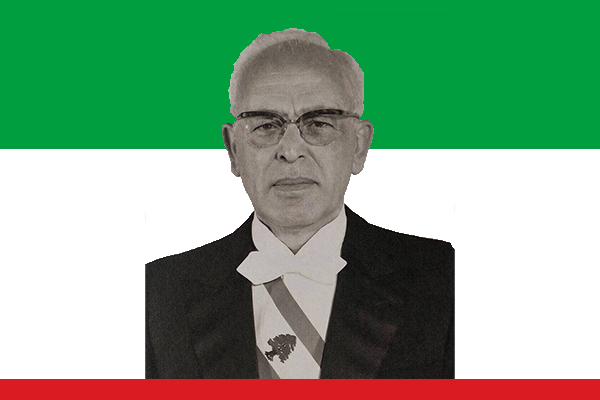
President Suleiman Frangieh
Suleiman Frangieh was a prominent Lebanese political leader who served as the President of Lebanon from 1970 to 1976, a crucial and turbulent period in the country’s modern history. Born on June 15, 1910, in Zgharta, a town in northern Lebanon, Frangieh came from a powerful Maronite Christian family with deep political roots. His leadership coincided with the early years of the Lebanese Civil War, making his presidency one of the most challenging in Lebanon’s political timeline.
Early Life and Political Background
Suleiman Frangieh grew up in a politically influential family. His grandfather and father were both involved in Lebanese politics, which shaped his early exposure to governance and leadership. However, his early life was marked by tragedy. In 1957, a violent family feud resulted in the killing of several members of his family, including his father and sister. This event had a lasting impact on him and further solidified his role within his community.
Frangieh began his political career as a Member of Parliament representing Zgharta in 1957. Over the years, he held several ministerial positions, including Minister of Post, Telegraph and Telephone, Minister of Agriculture, and Minister of Interior. Through these roles, he developed strong alliances within Lebanon’s complex sectarian political system.
Election as President
In 1970, Suleiman Frangieh was elected President of Lebanon in one of the closest presidential elections in the country’s history. He won by a single vote in the Lebanese Parliament, defeating Elias Sarkis. His victory reflected deep political divisions within the country. As a Maronite Christian, his election followed Lebanon’s confessional political system, where the presidency is traditionally reserved for a Maronite Christian.
Frangieh was known for his straightforward and traditional leadership style. He maintained strong ties with Syria, which played an increasingly influential role in Lebanese affairs during his presidency.
Presidency and the Lebanese Civil War
Frangieh’s presidency (1970–1976) was marked by rising tensions among Lebanon’s diverse religious and political groups. The country faced increasing conflict between Christian militias, Muslim factions, Palestinian armed groups, and various political parties. These tensions eventually escalated into the Lebanese Civil War in 1975.
During the early stages of the war, Frangieh struggled to maintain national unity and control. The Lebanese state institutions weakened as militias gained power. His relationship with Syrian President Hafez al-Assad led to Syrian military intervention in Lebanon in 1976, aimed at stabilizing the country. This intervention significantly influenced Lebanon’s political landscape for decades.
Although Frangieh attempted to mediate between conflicting parties, the violence continued to spread. His presidency ended in 1976 amid ongoing civil conflict, and he was succeeded by Elias Sarkis.
Political Legacy
After leaving office, Suleiman Frangieh remained active in Lebanese politics and continued to influence northern Lebanon through his political base in Zgharta. His political legacy continued through his family. His son, Tony Frangieh, was a militia leader but was tragically killed in 1978 during the Ehden massacre. Later, his grandson, also named Suleiman Frangieh, became a significant political figure and leader of the Marada Movement.
Suleiman Frangieh is remembered as a leader who governed during one of Lebanon’s most unstable periods. While critics argue that his presidency failed to prevent the outbreak of civil war, supporters highlight the immense challenges he faced in a deeply divided society. His close relationship with Syria remains a debated aspect of his political career.