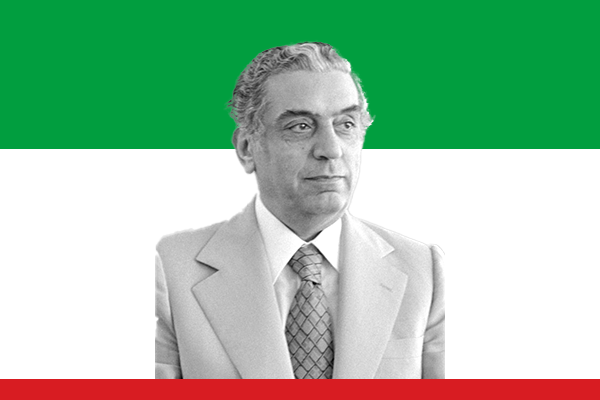
Early Life and Education
Élias Sarkis was born on July 20, 1924, in Chekka, Lebanon. He grew up in a modest Maronite Christian family that valued education and public service. Sarkis pursued his higher studies in law at Saint Joseph University in Beirut, one of Lebanon’s most prestigious institutions. After completing his law degree, he entered public service, where his administrative skills and dedication soon earned him recognition. His early career in Lebanon’s civil service shaped his reputation as a disciplined and capable technocrat.
Rise in Public Service
Sarkis began his professional journey as a magistrate before moving into financial administration. His competence led to his appointment as Governor of the Central Bank of Lebanon (Banque du Liban) in 1967. During his tenure, he worked to stabilize Lebanon’s financial system and maintain confidence in the banking sector. The late 1960s and early 1970s were turbulent times in the Middle East, and Sarkis played a crucial role in safeguarding Lebanon’s monetary stability amid regional uncertainty. His calm and methodical approach earned him respect across political lines.
Election as President
Élias Sarkis was elected President of Lebanon on May 8, 1976, during one of the most challenging periods in the nation’s history. Lebanon was engulfed in a brutal civil war that had begun in 1975. Sarkis assumed office on September 23, 1976, succeeding President Suleiman Frangieh. His election was supported by Syria, which had intervened militarily in Lebanon earlier that year. Sarkis was viewed as a consensus candidate who could bridge deep political and sectarian divides.
Presidency During Civil War
Sarkis’s presidency (1976–1982) coincided with the height of the Lebanese Civil War. The country was fragmented by sectarian militias, political factions, and foreign interventions. One of Sarkis’s primary goals was to restore state authority and rebuild national institutions. However, his efforts were often hindered by the limited power of the presidency amid the chaos of war.
He attempted to strengthen the Lebanese Armed Forces and promote dialogue among rival groups. Sarkis believed in compromise and diplomacy rather than confrontation. Despite his sincere efforts, the conflict persisted, and the central government struggled to exert control over various regions of the country.
Challenges and Foreign Influence
During Sarkis’s term, Lebanon faced significant foreign involvement, particularly from Syria and Israel. Syrian troops remained in Lebanon, influencing political developments. In 1982, Israel launched a large-scale invasion of Lebanon, further destabilizing the country. Sarkis had to navigate these complex geopolitical pressures while attempting to maintain Lebanon’s sovereignty and unity.
Although criticized by some for lacking assertiveness, Sarkis was widely regarded as an honest and principled leader. His leadership style was characterized by caution, patience, and a commitment to constitutional processes. He worked tirelessly behind the scenes to reduce violence and encourage political reconciliation.
Later Years and Legacy
Élias Sarkis’s term ended on September 23, 1982, when he was succeeded by Amine Gemayel. After leaving office, Sarkis largely withdrew from public life. He remained respected for his integrity and dedication to public service. Sarkis passed away on June 27, 1985.
His legacy is often viewed through the lens of the immense difficulties he faced. Leading a country divided by civil war and foreign intervention would have challenged even the most powerful leader. While he was unable to end the conflict, Sarkis maintained the continuity of the Lebanese state during one of its darkest chapters. His presidency symbolized an effort to preserve constitutional governance in the face of overwhelming turmoil.
Conclusion
President Élias Sarkis remains an important figure in Lebanon’s modern history. His career reflects a life devoted to public service, financial stewardship, and national unity. Though constrained by circumstances beyond his control, his calm leadership and personal integrity left a lasting mark on Lebanese political life.