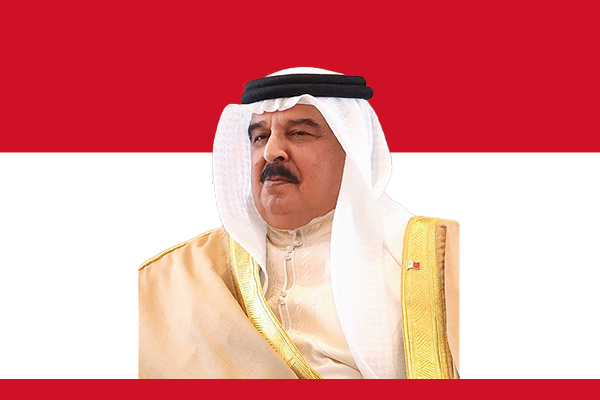
King Hamad bin Isa Al Khalifa is the reigning monarch of Bahrain and has played a significant role in shaping the country’s political and economic landscape in the 21st century. Born on January 28, 1950, in Riffa, Bahrain, he is the eldest son of Isa bin Salman Al Khalifa, the former Emir of Bahrain. Educated both locally and abroad, Hamad attended The Leys School in Cambridge, United Kingdom, and later received military training at the Royal Military Academy Sandhurst. His education and training prepared him for leadership responsibilities from a young age.
Hamad became Emir of Bahrain in 1999 following the death of his father. In 2002, he declared Bahrain a kingdom and assumed the title of King, marking a historic transition in the nation’s governance. This transformation was accompanied by significant political reforms. One of his early initiatives was the introduction of the National Action Charter in 2001, which was approved by an overwhelming majority in a national referendum. The charter aimed to modernize Bahrain’s political system, promote constitutional rule, and establish a bicameral legislature.
Under King Hamad’s leadership, Bahrain adopted a new constitution in 2002. The reforms expanded political participation, allowed women to vote and run for office, and recognized greater civil liberties. These steps were widely regarded as progressive within the Gulf region. Women in Bahrain gained increased opportunities in public life, and the country witnessed the appointment of women to ministerial and parliamentary positions.
Economically, King Hamad has focused on diversifying Bahrain’s economy beyond oil. Bahrain, one of the first Gulf countries to discover oil, faced the challenge of limited reserves compared to its neighbors. The king’s government promoted sectors such as banking, finance, tourism, and information technology. Bahrain developed into a regional financial hub, attracting international investment and fostering economic growth. Infrastructure projects, including modern highways, bridges, and urban development plans, have also been undertaken during his reign.
However, King Hamad’s tenure has not been without challenges. In 2011, Bahrain experienced significant unrest during the wave of protests known as the Arab Spring. Demonstrations called for political reforms and greater representation. The government responded with a mix of dialogue and security measures. To address concerns, King Hamad established the Bahrain Independent Commission of Inquiry (BICI) to investigate the events of 2011. The commission’s report acknowledged instances of excessive force and recommended reforms. The government subsequently introduced measures aimed at strengthening oversight and legal accountability.
In foreign policy, King Hamad has maintained close ties with neighboring Gulf Cooperation Council (GCC) countries, particularly Saudi Arabia and the United Arab Emirates. Bahrain is also a key ally of the United States, hosting the U.S. Navy’s Fifth Fleet. The king has emphasized regional stability and cooperation, while supporting diplomatic initiatives within the Middle East. In 2020, Bahrain normalized relations with Israel under the Abraham Accords, reflecting a significant shift in regional diplomacy.
King Hamad’s leadership style blends tradition with modernization. As a member of the Al Khalifa ruling family, he upholds Bahrain’s monarchical system while promoting gradual reform. His reign has been marked by efforts to balance political openness with stability, economic growth with social development, and national identity with global engagement.
Today, King Hamad bin Isa Al Khalifa remains a central figure in Bahrain’s governance. His policies have shaped the country’s constitutional framework, economic direction, and international relations. While debates continue regarding the pace and depth of political reform, his impact on Bahrain’s contemporary history is undeniable. Through reform initiatives, economic diversification, and diplomatic engagement, King Hamad has sought to guide Bahrain toward a stable and modern future while preserving its cultural and political heritage.