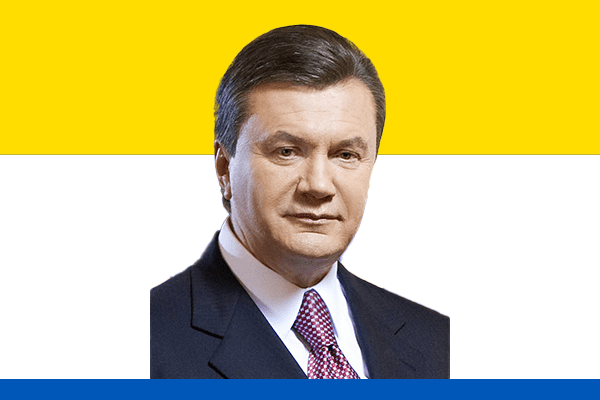
Early Life and Political Rise
Viktor Yanukovych was born on July 9, 1950, in Yenakiieve, a city in eastern Ukraine. He grew up in the industrial Donbas region, which shaped much of his political identity. Yanukovych studied mechanical engineering and later developed a career in regional administration.
His political rise began when he became involved in local government in the Donetsk region. He earned a reputation as an effective manager who supported industrial development and business growth. Because of his administrative abilities, regional leaders promoted him to higher positions in government. In 1997, he became the Governor of Donetsk Oblast, one of Ukraine’s most economically important regions. His success in that role helped him gain national political attention.
First Term as Prime Minister
In 2002, President Leonid Kuchma appointed Viktor Yanukovych as Prime Minister of Ukraine. During this period, Yanukovych focused on strengthening the economy and improving relations with neighboring countries, especially Russia. His government supported industrial expansion and encouraged cooperation with large Ukrainian businesses.
Yanukovych also attempted to stabilize Ukraine’s economy and increase government revenues. Many industrial regions supported his policies because they benefited from stronger ties with Russian markets. However, critics argued that his government favored powerful business groups and failed to implement democratic reforms.
The 2004 Presidential Election and Orange Revolution
Yanukovych ran for president in 2004 with the support of the ruling government. The election created one of the most dramatic political crises in Ukraine’s history. His main opponent, Viktor Yushchenko, represented a pro-Western political movement.
When authorities announced Yanukovych as the winner, large numbers of Ukrainians protested the results. Demonstrators gathered in Kyiv and other cities, claiming that the election involved widespread fraud. These protests became known as the Orange Revolution.
As public pressure increased, Ukraine’s Supreme Court ordered a new election. In the repeat vote, Viktor Yushchenko defeated Yanukovych. As a result, Yanukovych lost the presidency and soon left the position of prime minister.
Return as Prime Minister
Despite his defeat, Yanukovych remained active in politics. He rebuilt his political support base and strengthened his political party, the Party of Regions. In the 2006 parliamentary elections, his party won strong support, particularly in eastern and southern Ukraine.
Because of this success, Yanukovych returned to power as Prime Minister in 2006. During his second term, he attempted to balance relations between Russia and the European Union. His government focused on economic growth, energy policy, and political stability.
However, tensions between the prime minister and President Viktor Yushchenko created constant political conflict. Disagreements over foreign policy and constitutional powers led to government instability.
Later Political Career
Yanukovych continued his political journey after leaving the prime minister’s office in 2007. In 2010, he achieved a major political victory when he won the presidential election and became the President of Ukraine.
His presidency faced increasing criticism due to corruption allegations and concerns about democratic decline. In 2014, widespread protests erupted across the country after he rejected an agreement with the European Union. The protests escalated into a political crisis that forced him to leave Ukraine.
Conclusion
Viktor Yanukovych’s career illustrates the complex political struggles that Ukraine experienced after gaining independence. As Prime Minister, he shaped economic policy and represented the interests of eastern industrial regions. His leadership also highlighted the deep political divisions within Ukrainian society. Although his legacy remains controversial, his influence on Ukraine’s modern political history remains significant.