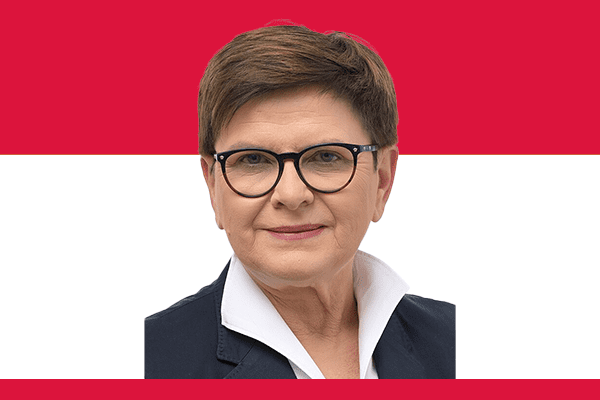
Early Life and Education
Beata Szydło was born on April 15, 1963, in Oświęcim, Poland. She grew up in a modest family and developed a strong connection to Polish traditions and Catholic values from an early age. She studied ethnography at the Jagiellonian University in Kraków, one of Poland’s most respected universities. Her academic background helped her understand Polish culture, society, and history, which later influenced her political ideas and public image.
Political Career
Beata Szydło began her public service career in local government. She served as the mayor of Brzeszcze from 1998 to 2005, where she gained experience in administration and local development. Her practical leadership at the local level helped her build a reputation as a hardworking and capable politician.
She entered national politics when she became a member of the Polish parliament, the Sejm, in 2005. As a member of the Law and Justice Party, she quickly rose in influence. She worked closely with party leader Jarosław Kaczyński and became known for her loyalty, discipline, and strong communication skills. In 2015, the party selected her as its candidate for prime minister.
Prime Minister of Poland
Beata Szydło became Prime Minister of Poland in November 2015 after the Law and Justice Party won the parliamentary elections. She led a government that promised social reform, stronger state institutions, and protection of national interests. One of her most popular policies was the “Family 500+” program, which provided financial support to families with children. This program increased her popularity among many Polish citizens and strengthened support for her party.
Her government also focused on lowering the retirement age, improving tax collection, and increasing social spending. She often emphasized national sovereignty and argued for policies that placed Polish interests first. On the international stage, she took a firm position within the European Union and defended Poland’s independent decision-making.
Leadership and Legacy
Beata Szydło’s leadership style was direct, disciplined, and strongly connected to conservative values. She presented herself as a leader who understood ordinary citizens and their daily struggles. Supporters admired her for expanding social welfare and defending traditional values. Critics, however, argued that her government weakened democratic institutions and created tension with European Union leaders.
In December 2017, she stepped down as prime minister, and Mateusz Morawiecki succeeded her. Even after leaving the post, she remained an important political figure. She later became a Member of the European Parliament and continued to represent conservative political views on a wider stage.
Conclusion
Beata Szydło remains an important figure in Polish political history. She rose from local leadership to become Prime Minister of Poland and shaped national politics through social reforms, conservative policies, and strong public messaging. Her time in office left a lasting impact on Poland’s domestic and European political landscape.