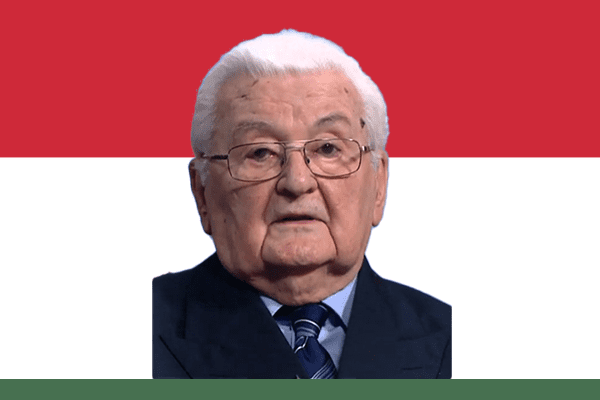
Early Life and Education
Péter Boross was born on August 27, 1928, in Nagybajom, Hungary. He grew up during a time of political turbulence in Europe, which shaped his interest in governance and public administration. He pursued higher education in law and political studies, equipping himself with the knowledge required for a future in public service.
Instead of following a purely academic path, Boross entered the workforce and gained practical experience in administration and business. His early career allowed him to understand Hungary’s socio-economic structure, which later influenced his political decisions.
Entry into Politics
Boross entered national politics relatively late compared to many of his contemporaries. After the fall of communism in Hungary in 1989, he joined the Hungarian Democratic Forum (MDF), a conservative political party. He quickly rose within the party due to his organizational skills and calm leadership style.
In 1990, Hungary held its first democratic elections after decades of communist rule. The MDF formed the government, and Boross took on important responsibilities. He served as Minister of the Interior, where he actively worked on strengthening law enforcement and ensuring internal stability during a sensitive political transition.
Prime Ministership
In December 1993, Boross became Prime Minister following the death of József Antall. He assumed leadership at a challenging time, as Hungary continued to transition toward a market economy and democratic governance. Boross focused on maintaining stability rather than introducing radical changes.
He actively ensured the continuation of existing policies and worked to preserve political order. His government emphasized law, security, and gradual reform. Although his tenure was short, he managed to guide the country through a delicate phase without major disruptions.
During his leadership, Boross prioritized national interests and supported Hungary’s integration into European institutions. He maintained diplomatic relations and strengthened Hungary’s international position.
Political Views and Leadership Style
Boross adopted a conservative and pragmatic approach to governance. He valued tradition, national identity, and social stability. Rather than seeking rapid transformation, he preferred gradual and controlled reforms.
He demonstrated a firm leadership style and focused on administrative efficiency. His experience in internal affairs influenced his emphasis on law and order. He believed that a stable political environment was essential for economic and social progress.
Later Life and Influence
After his term as Prime Minister ended in 1994, Boross remained active in Hungarian public life. He continued to express his views on politics and national issues. He also served as an advisor and respected elder statesman within conservative circles.
Instead of withdrawing from public discourse, Boross contributed to debates on governance, national identity, and Hungary’s role in Europe. His experience made him a significant voice in Hungarian politics even after leaving office.
Legacy and Significance
Péter Boross left a legacy of stability and continuity during a critical period in Hungary’s history. He successfully managed the transition of leadership after Antall’s death and ensured that the government functioned effectively.
His emphasis on order and gradual reform helped Hungary navigate the uncertainties of the early 1990s. While his tenure was brief, his contribution to maintaining political balance remains important.
Boross’s career reflects the role of experienced administrators in shaping democratic systems. He demonstrated that steady leadership can be just as valuable as transformative change.
Conclusion
Péter Boross stands as a key figure in Hungary’s post-communist political development. Through active leadership and a focus on stability, he guided the country during a challenging time. His contributions continue to influence Hungarian political thought and governance.