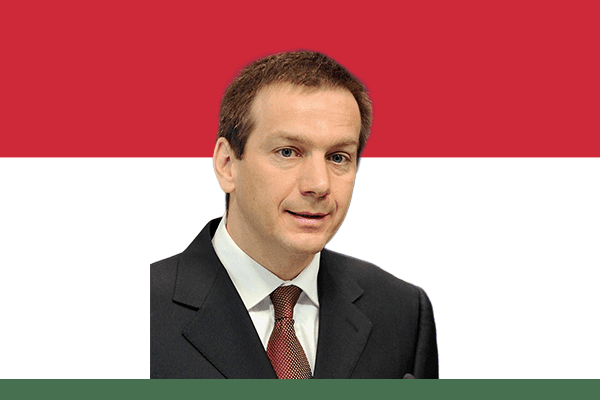
Early Life and Education
Gordon Bajnai was born on March 5, 1968, in Szeged, Hungary. He grew up in a middle-class family that valued education and discipline. He studied economics at the Budapest University of Economic Sciences, where he gained strong analytical and financial skills.
He began his career in the business sector, working in finance and investment. He held leadership roles in several companies and built a reputation as a competent manager. His experience in the corporate world shaped his practical and results-oriented approach to governance.
Entry into Politics
Bajnai entered politics in the early 2000s. He initially served in various economic and development roles within the Hungarian government. He became Minister of Local Government and Regional Development and later Minister of National Development and Economy.
He focused on economic growth, infrastructure development, and efficient use of European Union funds. Instead of relying on ideology, he emphasized pragmatic solutions and evidence-based policies. His work earned him recognition as a technocrat capable of handling complex financial challenges.
Prime Minister of Hungary
In 2009, Bajnai became Prime Minister after the resignation of Ferenc Gyurcsány. Hungary faced a severe economic crisis at the time, with rising debt, declining investor confidence, and pressure from international financial institutions.
Bajnai immediately implemented austerity measures and structural reforms. He reduced public spending, restructured social benefits, and introduced policies to stabilize the national budget. He worked closely with organizations like the International Monetary Fund and the European Union to secure financial assistance.
He communicated openly with the public and explained the necessity of difficult decisions. Rather than avoiding responsibility, he actively addressed economic problems and prioritized national stability.
Policies and Achievements
During his tenure, Bajnai strengthened Hungary’s fiscal discipline and restored some level of economic confidence. He improved transparency in government spending and encouraged foreign investment.
He also supported small and medium-sized enterprises and promoted job creation. His government laid the groundwork for economic recovery, even though his time in office remained short.
Instead of focusing on political popularity, he emphasized responsibility and long-term sustainability. His leadership demonstrated how technocratic governance can address urgent national challenges.
Life After Premiership
After leaving office in 2010, Bajnai remained active in public life. He later returned to politics and founded the political movement “Together 2014,” which aimed to unite opposition forces.
Although his political influence declined over time, he continued to contribute to discussions on economic policy and governance. He also worked in international business and advisory roles, maintaining his connection to global economic affairs.
Legacy and Significance
Gordon Bajnai’s legacy centers on crisis management and responsible leadership. He guided Hungary through one of its most difficult economic periods with determination and clarity.
He demonstrated that effective leadership requires decisive action, even when policies are unpopular. His emphasis on transparency, fiscal discipline, and cooperation with international institutions left a lasting impact on Hungary’s economic policies.
Conclusion
Gordon Bajnai remains an important figure in Hungarian politics and economics. His tenure as Prime Minister highlighted the importance of expertise, accountability, and pragmatic decision-making. Through his active leadership, he helped stabilize Hungary during a time of uncertainty and laid a foundation for future recovery.