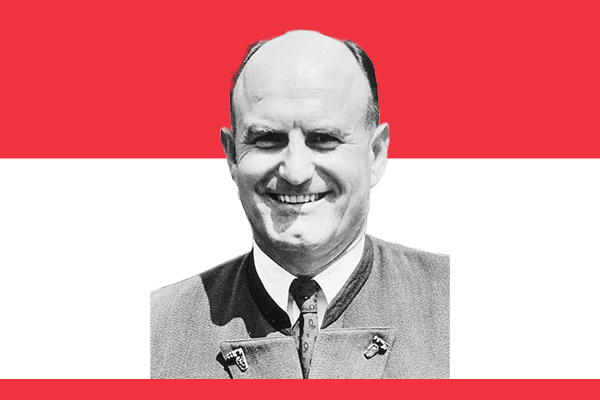
Mr. Josef Klaus
In Office: 2 April 1964 – 21 April 1970
Political Party: Austrian People’s Party
Home State: Kötschach-Mauthen
Lifespan: 1910–2001
Country: Austria
Image credits available here.
Early Life and Education
Josef Klaus was born on August 15, 1910, in Mauthen, Austria–Hungary. He grew up in a modest family that valued education and discipline. During his youth, he developed a strong interest in law and politics. He studied law at the University of Vienna and earned a doctorate in jurisprudence.
While attending university, Klaus actively participated in student organizations and political discussions. These experiences helped him develop leadership qualities and a deep understanding of Austrian society. After completing his education, he worked as a lawyer and gained valuable experience in public affairs.
Political Career Beginnings
Josef Klaus began his political career with the Austrian People’s Party (ÖVP). After World War II, Austria faced political instability and economic hardship. Klaus worked actively to rebuild democratic institutions and restore public confidence in government.
He first gained national attention as the governor of Salzburg, a position he held from 1949 to 1961. During his tenure, he improved infrastructure, supported tourism, and encouraged economic growth in the region. His success in Salzburg established him as a capable administrator and respected political leader.
In 1961, Klaus joined the federal government as Minister of Finance. In this role, he focused on strengthening Austria’s economy and maintaining financial stability. His practical approach and strong management skills increased his popularity within the party.
Chancellor of Austria
In 1964, Josef Klaus became Chancellor of Austria after succeeding Alfons Gorbach. As chancellor, he introduced policies that promoted modernization and economic development. He encouraged industrial expansion, supported technological progress, and improved Austria’s position in European trade.
Klaus believed in fiscal discipline and responsible governance. He actively worked to balance the national budget and reduce unnecessary government spending. Under his leadership, Austria experienced economic growth and rising living standards.
One of his major achievements involved strengthening Austria’s international reputation. Klaus promoted cooperation with European countries while maintaining Austria’s neutrality during the Cold War. His diplomatic efforts helped Austria remain stable and respected in international politics.
Leadership Style and Reforms
Josef Klaus demonstrated a calm and disciplined leadership style. He preferred practical solutions over political conflict and focused on long-term national interests. He encouraged efficiency within government institutions and supported administrative reforms.
During his time in office, Klaus also promoted educational improvements and modernization in public services. He recognized that Austria needed skilled workers and modern infrastructure to compete in a changing world economy.
Although he faced criticism from political opponents, Klaus remained committed to his policies. He believed strong leadership and careful planning would secure Austria’s future prosperity.
Challenges and Political Defeat
Despite his achievements, Josef Klaus encountered growing political challenges in the late 1960s. Social changes, economic concerns, and shifting political attitudes created difficulties for his government. The Austrian People’s Party gradually lost support among voters.
In the 1970 general election, the Social Democratic Party, led by Bruno Kreisky, defeated Klaus’s party. Following the election, Klaus stepped down as chancellor. Although his political career at the national level ended, many Austrians continued to respect his contributions to the country.
Legacy and Historical Importance
Josef Klaus left a lasting impact on Austrian politics and governance. He strengthened Austria’s economy, promoted modernization, and reinforced democratic stability during an important period in the nation’s history. His commitment to responsible leadership and economic discipline influenced future governments.
Historians remember Klaus as a leader who balanced tradition with progress. He guided Austria through social and economic transformation while maintaining political stability and international respect.
Conclusion
Josef Klaus played a significant role in Austria’s post-war development. Through active leadership, economic reforms, and diplomatic efforts, he helped modernize the country and improve the lives of many Austrians. His legacy continues to hold an important place in Austrian political history.