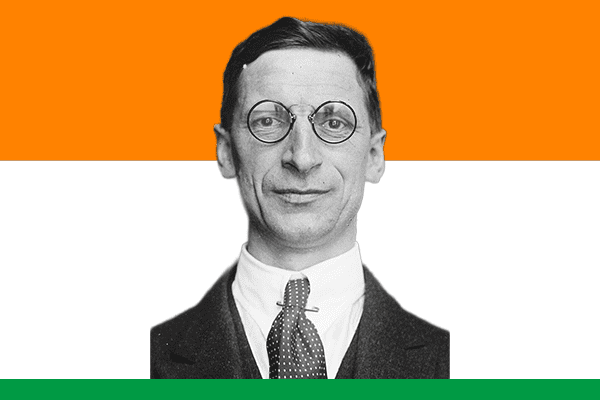
Early Life and Education
Éamon de Valera was born on October 14, 1882, in New York City, United States. His mother, Catherine Coll, came from Ireland, while his father, Juan Vivion de Valera, had Spanish roots. After his father’s death, his family sent him to Ireland, where relatives raised him in County Limerick.
He studied mathematics at Blackrock College in Dublin and later became a mathematics teacher. During his early years, he developed a deep interest in Irish culture, language, and nationalism. He joined the Gaelic League and actively supported the revival of Irish traditions and identity.
Role in the Irish Independence Movement
Éamon de Valera became deeply involved in Irish politics during the early twentieth century. He participated in the Easter Rising of 1916, a rebellion against British rule in Ireland. British authorities arrested him after the uprising, but they spared him from execution because of his American birth.
After his release, he emerged as a leading figure in the Irish independence movement. He became president of Sinn Féin and later served as President of the Irish Republic declared by revolutionaries. Instead of accepting British control, he strongly advocated complete Irish independence.
De Valera traveled to the United States in 1919 to gain international support and raise funds for the Irish cause. His efforts strengthened global awareness of Ireland’s struggle for freedom.
Political Career and Leadership
In 1921, Irish leaders signed the Anglo-Irish Treaty with Britain. However, Éamon de Valera opposed the treaty because it divided Ireland and required loyalty to the British Crown. His opposition contributed to the Irish Civil War.
After the conflict, he founded the political party Fianna Fáil in 1926. The party quickly gained popularity, and de Valera became Prime Minister, also known as Taoiseach, in 1932. During his leadership, he introduced major political and constitutional reforms.
In 1937, he helped create a new Irish constitution that strengthened Ireland’s independence and established the office of President of Ireland. He also reduced British influence over Irish affairs and promoted Irish culture and language.
Leadership During World War II
During World War II, Éamon de Valera maintained Ireland’s policy of neutrality. He believed neutrality protected Irish independence and prevented the country from becoming involved in another devastating conflict.
Although many countries criticized Ireland’s neutral stance, de Valera defended his decision firmly. His leadership during the war demonstrated his commitment to protecting national sovereignty and stability.
Presidency and Later Years
In 1959, Éamon de Valera became President of Ireland. As president, he represented the nation with dignity and experience. Although the role carried limited political power, he remained an important symbol of Irish identity and independence.
He served two terms as president before retiring in 1973. Throughout his long career, he influenced generations of Irish politicians and citizens.
Legacy and Historical Importance
Éamon de Valera left a lasting impact on Ireland’s history. He helped shape Ireland into an independent democratic state and strengthened its national identity. His work on the Irish constitution remains one of his most important achievements.
Historians often debate some of his policies and decisions, but few deny his influence on Irish politics. Through determination and leadership, he guided Ireland during critical moments of change and development.
Conclusion
Éamon de Valera devoted his life to Irish independence and national progress. From revolutionary leader to president, he shaped modern Ireland through active leadership and political reform. His contributions continue to hold great significance in Irish history.