PRESIDETNS OF PAKISTAN
Origins and Establishment of the Presidency
Pakistan established the office of the President on 23 March 1956 when it adopted its first constitution. Before that, the British monarch served as the ceremonial head of state, represented in Pakistan by a Governor-General. The 1956 Constitution transformed Pakistan into a republic, ending its status as a British Dominion. With this change, Iskander Mirza, the last Governor-General, became Pakistan’s first President.
LIST OF PRESIDENTS OF PAKISTAN


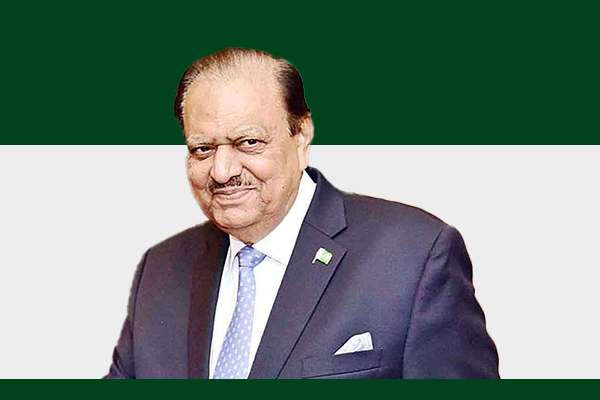


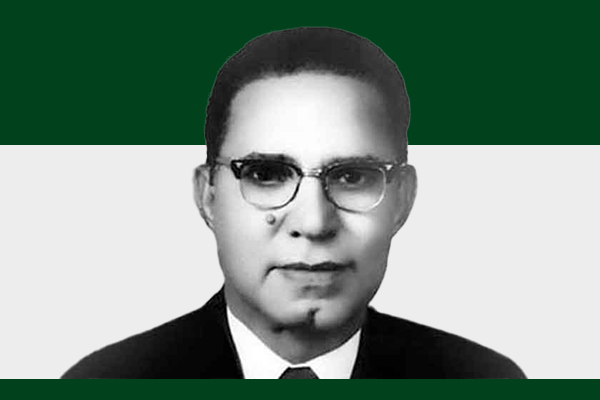
Initially, the President held a largely ceremonial role under a parliamentary system. However, Pakistan’s political history, marked by military coups and constitutional shifts, repeatedly changed the balance of power between the President and the Prime Minister.
Constitutional Role of the President
Today, under the 1973 Constitution, the President serves as the ceremonial head of state. The office does not carry executive powers in normal circumstances. The Prime Minister leads the government, while the President represents national unity and performs constitutional functions such as:
- Appointing the Prime Minister (based on parliamentary majority),
- Approving laws passed by Parliament,
- Summoning and dissolving assemblies (on the PM’s advice),
- Appointing provincial governors and judges.
The electoral college, made up of national and provincial legislators, elects the President for a five-year term. The President’s powers have expanded or shrunk depending on political circumstances, especially under military regimes.
Shifts in Presidential Power
Pakistan has alternated between parliamentary and presidential models. Military rulers expanded presidential authority, while elected governments worked to limit it.
- General Ayub Khan introduced the 1962 Constitution, creating a strong presidential system. He served as both head of state and chief executive.
- General Zia-ul-Haq, through the 8th Amendment (1985), gave the President the power to dismiss elected governments, creating a hybrid system that weakened parliamentary democracy.
- Benazir Bhutto and Nawaz Sharif both saw their governments dismissed under Article 58(2)(b).
- In 1997, the 13th Amendment removed that article, restoring parliamentary supremacy.
- General Pervez Musharraf reversed this shift with the 17th Amendment, but the 18th Amendment in 2010—passed during Asif Ali Zardari’s presidency—stripped the office of those expanded powers.
Since then, the President has resumed a mostly symbolic role.
Notable Presidents of Pakistan
Iskander Mirza (1956–1958)
Mirza was Pakistan’s first President. He declared martial law in 1958 and appointed General Ayub Khan as Chief Martial Law Administrator. Within weeks, Ayub ousted Mirza in a bloodless coup, beginning Pakistan’s long history of military dominance in politics.
Ayub Khan (1958–1969)
Ayub became Pakistan’s first military president and concentrated power in the presidency. He introduced the Basic Democracies system and pursued industrial growth, but his authoritarian style sparked unrest. He resigned in 1969 amid mass protests.
Zia-ul-Haq (1978–1988)
General Zia took over in a military coup in 1977 and later became President. He Islamized Pakistan’s laws and society, institutionalized military power, and passed the 8th Amendment. Zia ruled with an iron grip until his death in a mysterious plane crash in 1988.
Pervez Musharraf (2001–2008)
Musharraf seized power in 1999. He assumed the presidency in 2001 and ruled both as military chief and president. He supported the U.S. War on Terror but faced growing domestic opposition. He stepped down in 2008 to avoid impeachment.
Asif Ali Zardari (2008–2013)
Zardari was the first civilian president to complete a full term. He presided over major constitutional reforms, including the 18th Amendment, which returned Pakistan to a true parliamentary system. Zardari’s presidency marked a key transition back to democracy.
Conclusion
The presidency in Pakistan has evolved through decades of political upheaval, constitutional reforms, and military takeovers. While it began as a ceremonial office, military rulers used it to centralize power. Civilian leaders, especially in recent years, have redefined the presidency as a symbolic institution, reflecting Pakistan’s commitment—at least constitutionally—to parliamentary democracy.
Despite its current limited powers, the presidency remains a critical position during national crises. Its historical importance lies not just in constitutional duties but in how it reflects the broader struggle between democratic governance and authoritarian control in Pakistan.