Early Life and Background
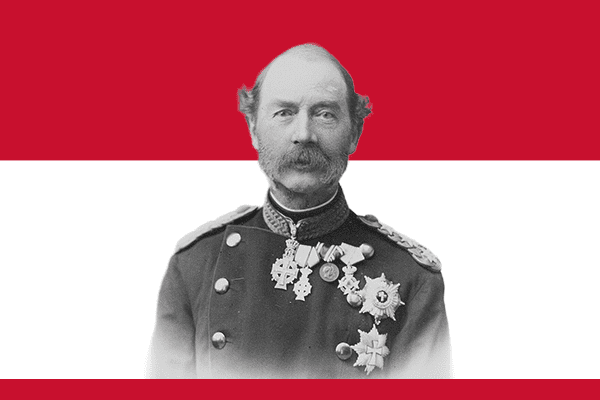
Christian IX was born on April 8, 1818, in Gottorf Castle, Schleswig. He belonged to the House of Glücksburg, a royal family with strong European connections. His parents raised him with discipline and responsibility, which shaped his character from an early age.
During his youth, Christian received military training and studied governance, history, and languages. These experiences prepared him for royal duties and public service. Although he did not initially expect to become king, circumstances within the Danish royal family eventually placed him in line for the throne.
Rise to the Throne
In 1863, Christian IX became King of Denmark after the death of King Frederick VII. At that time, Denmark faced serious political tensions, especially regarding the duchies of Schleswig and Holstein. Christian inherited a difficult situation, and soon after his accession, Denmark entered the Second Schleswig War against Prussia and Austria.
Although Denmark lost the war in 1864, Christian worked hard to stabilize the nation. Instead of allowing defeat to weaken the country permanently, he encouraged unity and national rebuilding. His determination helped Denmark recover from political uncertainty and regain confidence.
Leadership and Reforms
Christian IX supported constitutional monarchy and cooperated with elected governments. He understood that modern Europe required rulers to work alongside democratic institutions rather than rule with absolute authority. Because of this approach, he maintained stability within Denmark during a period of rapid change.
The king promoted economic growth, education, and national development. Under his reign, Denmark improved agriculture, trade, and infrastructure. Railways expanded, industries developed, and communication systems improved. Christian encouraged progress while preserving Danish traditions and culture.
He also represented Denmark in diplomatic matters and strengthened international relations. European leaders respected him for his calm personality and wise judgment. His diplomatic efforts helped Denmark maintain peaceful relations with neighboring countries after earlier conflicts.
Family and European Connections
Christian IX married Princess Louise of Hesse-Kassel in 1842. Together, they raised a large and influential family. Their children married into several European royal houses, which earned Christian the title “Father-in-law of Europe.”
His daughter Alexandra married Edward VII and later became Queen of the United Kingdom. Another daughter, Dagmar, married Alexander III and became Empress Maria Feodorovna of Russia. His son George became George I, while another grandson eventually became King Haakon VII of Norway.
Through these family connections, Christian IX influenced European royal politics and strengthened ties among monarchies.
Personality and Public Image
Christian IX gained popularity because of his modest lifestyle and approachable nature. Unlike some rulers who distanced themselves from ordinary citizens, he maintained close contact with the Danish people. He attended public events, supported charities, and encouraged national unity.
The Danish people admired his dedication and resilience, especially after the difficult years following the Schleswig War. Over time, he became a symbol of stability and continuity for Denmark.
Legacy and Historical Importance
King Christian IX left a lasting legacy in both Denmark and Europe. He modernized the Danish monarchy while respecting democratic principles and constitutional governance. His reign brought stability after a period of crisis and helped Denmark grow into a stronger nation.
Historians remember him not only as a Danish king but also as one of the most connected monarchs in European history. His descendants later ruled several European nations, and his influence continued long after his death in 1906.
Conclusion
King Christian IX served Denmark with wisdom, determination, and dignity for more than four decades. He guided the nation through challenges, supported modernization, and strengthened international relationships through diplomacy and family alliances. His reign remains an important chapter in European and Danish history.