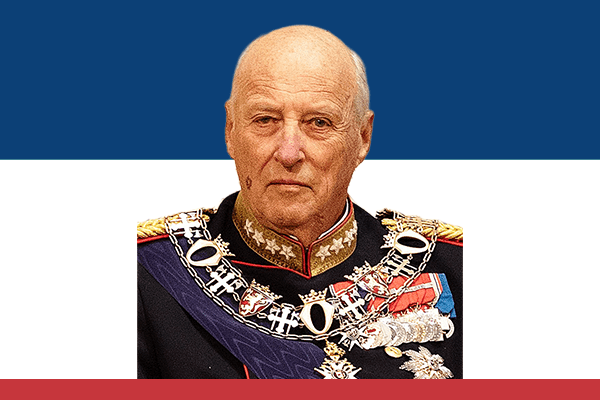
Early Life and Education
Harald V was born on February 21, 1937, in Skaugum, Norway. He is the son of King Olav V and Crown Princess Märtha. During World War II, the royal family escaped from Nazi occupation and lived in exile in the United States. These early experiences shaped Harald’s understanding of leadership and national resilience.
After the war, Harald returned to Norway and continued his education. He attended the Norwegian Military Academy and later studied history, economics, and political science at the University of Oxford in England. His education prepared him for the responsibilities of royal leadership and public service.
Becoming King of Norway
Harald V became King of Norway on January 17, 1991, following the death of his father, King Olav V. He pledged loyalty to the Norwegian Constitution and promised to serve the people faithfully. Unlike absolute monarchs of the past, Harald V does not govern the country politically. Instead, he performs ceremonial duties and represents Norway at national and international events.
The king quickly earned admiration for his approachable personality and calm leadership. He worked closely with government officials, diplomats, and community organizations while respecting democratic principles.
Role and Duties
As King of Norway, Harald V performs many important ceremonial and symbolic duties. He opens the Norwegian Parliament each year, hosts visiting world leaders, and attends national celebrations. He also travels internationally to strengthen Norway’s diplomatic and cultural relations.
King Harald V actively supports humanitarian causes, environmental protection, and sports development. He encourages unity and inclusion among Norwegian citizens. Through speeches and public appearances, he inspires people during both celebrations and difficult times.
The king has a strong passion for sports, especially sailing. He represented Norway in international sailing competitions and even participated in the Olympic Games. His interest in sports reflects his energetic personality and commitment to healthy living.
Marriage and Family
One of the most important moments in Harald’s life was his marriage to Sonja Haraldsen in 1968. Their relationship faced opposition because Sonja was not born into royalty. However, Harald firmly expressed his desire to marry for love, and the royal family eventually approved the union.
Queen Sonja became an admired member of the Norwegian royal family. Together, they have two children: Crown Prince Haakon and Princess Märtha Louise. Crown Prince Haakon is the heir to the Norwegian throne and continues the royal family’s tradition of public service.
Leadership and Modernization
King Harald V has modernized the Norwegian monarchy while preserving its traditions. He encourages openness and maintains close contact with ordinary citizens. His speeches often emphasize equality, tolerance, and national solidarity.
In 2016, one of his most famous speeches highlighted diversity in Norwegian society. He stated that Norwegians come from different backgrounds, religions, and cultures, yet they all belong to the nation. This message strengthened his reputation as a compassionate and forward-thinking monarch.
Despite facing health challenges in recent years, Harald V continues to fulfill many royal duties with determination and dedication.
Legacy and Importance
King Harald V has become a symbol of stability and unity in Norway. His decades of service reflect loyalty, wisdom, and commitment to democratic values. Norwegians respect him not only as a monarch but also as a national figure who genuinely cares about the people.
His efforts to modernize the monarchy and promote inclusiveness have kept the royal institution relevant in contemporary society. Through active leadership and public service, he has built a lasting legacy for future generations.
Conclusion
King Harald V continues to serve Norway with honor and dedication. His leadership combines tradition with modern values, making him an admired figure both nationally and internationally. Through his active role in society, he strengthens Norway’s unity and cultural identity.