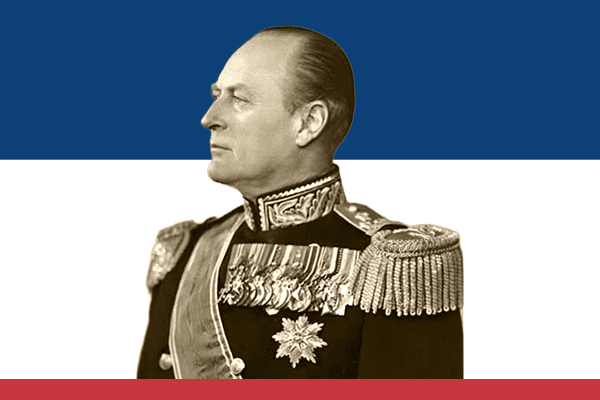
Olav V
Reign: 21 September 1957 – 17 January 1991
Home State: Charlottenlund
Lifespan: 1903–1991
Country: Norway
Image credits available here.
Early Life and Education
Olav V was born on July 2, 1903, in Sandringham, England. His full name was Alexander Edward Christian Frederik. He was the son of Prince Carl of Denmark and Princess Maud of Wales, the daughter of King Edward VII of the United Kingdom. In 1905, when Norway separated from Sweden, the Norwegian parliament selected his father as King Haakon VII of Norway. After this event, young Prince Alexander received the Norwegian name Olav.
Olav became the first Norwegian king in centuries to grow up mainly in Norway. He learned the Norwegian language and culture from an early age and developed a strong connection with the Norwegian people. He studied at the Norwegian Military Academy and later attended Balliol College at the University of Oxford in England. His education prepared him for leadership and public responsibilities.
Marriage and Family Life
In 1929, Olav married Princess Märtha of Sweden. Their marriage strengthened ties between Norway and Sweden and became very popular among the public. The couple had three children: Princess Ragnhild, Princess Astrid, and Prince Harald, who later became King Harald V of Norway.
Olav and Märtha shared a close relationship and worked together to support the Norwegian people. Sadly, Crown Princess Märtha died in 1954, three years before Olav became king. Her death deeply affected him, but he continued his royal duties with strength and determination.
Role During World War II
During World War II, Olav played a major role in supporting Norway’s resistance against Nazi Germany. When German forces invaded Norway in 1940, Olav and his father refused to surrender. The royal family and government escaped to the United Kingdom, where they continued to lead the Norwegian resistance movement in exile.
Olav visited Norwegian military camps, encouraged soldiers, and inspired citizens through radio broadcasts. His leadership during the war strengthened national morale and reinforced the monarchy’s importance. After the war ended in 1945, Olav returned to Norway as a national hero.
Reign as King of Norway
Olav became King of Norway in 1957 after the death of King Haakon VII. As king, he focused on strengthening national unity and maintaining close contact with ordinary citizens. He often traveled around the country and attended public events without excessive formality.
People admired his simple lifestyle. One famous story describes how he used public transportation during the oil crisis in the 1970s. Instead of demanding special treatment, he bought a ticket and rode the tram like any other citizen. This act increased public admiration for him.
Olav also supported sports and outdoor activities. He represented Norway in sailing competitions and even won an Olympic gold medal in sailing in 1928. His love for sports connected him strongly with Norwegian culture and traditions.
Legacy and Impact
King Olav V became known as “The People’s King” because of his kindness, humility, and devotion to Norway. He modernized the monarchy while preserving important traditions. His approachable personality helped strengthen trust between the royal family and the public.
Even after his death in 1991, Norwegians continued to honor his memory. His reign remains one of the most respected periods in Norwegian royal history. He left behind a legacy of patriotism, service, and unity that still inspires Norway today.
Conclusion
King Olav V dedicated his life to serving Norway and its people. Through his courage during World War II, his humble leadership, and his strong connection with citizens, he became one of Norway’s greatest monarchs. His legacy continues to hold an important place in Norwegian history and culture.