Rama VIII
Reign: 2 March 1935 – 9 June 1946
Coronation: 13 August 1946
Home State: Heidelberg
Lifespan: 1935–1946
Country: Thailand
Image credits available here.
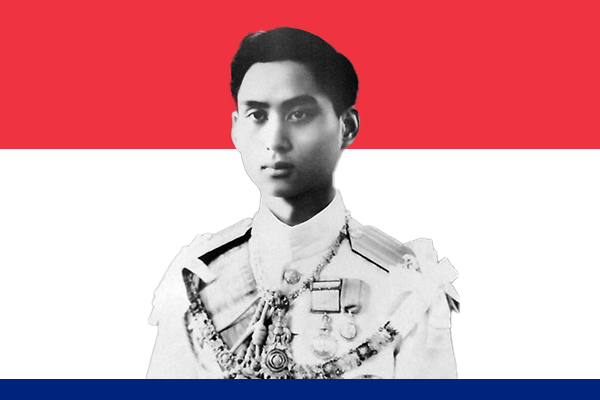
Early Life and Family Background
King Ananda Mahidol was born on September 20, 1925, in Heidelberg, Germany. He belonged to the Chakri dynasty, Thailand’s royal house. His father, Prince Mahidol Adulyadej, earned deep respect as the “Father of Modern Medicine” in Thailand, while his mother, Princess Srinagarindra, devoted her life to education and social welfare. Ananda grew up with his younger brother, Prince Bhumibol Adulyadej, who later became King Rama IX. From an early age, Ananda lived mostly abroad, which shaped his worldview and education.
Education and Life Abroad
Ananda spent much of his childhood in Switzerland, where his family settled after his father’s death in 1929. He studied at reputable Swiss schools and lived a relatively quiet life, far from royal ceremonies. His education emphasized discipline, humility, and academic excellence. Although he held the title of king, he experienced a simple upbringing under his mother’s guidance. This environment helped him develop a calm personality and a sense of responsibility, even at a young age.
Accession to the Throne
In 1935, King Prajadhipok (Rama VII) abdicated the throne following political changes in Thailand. The National Assembly selected Ananda Mahidol, then only nine years old, as the new king. He became King Rama VIII of Thailand. Because of his young age and residence abroad, a council of regents governed on his behalf. Thailand transitioned into a constitutional monarchy during this period, and the king’s role remained largely symbolic.
Return to Thailand and Royal Duties
King Ananda returned to Thailand in 1945 after World War II ended. The Thai people welcomed him with great enthusiasm, as many hoped his presence would strengthen national unity. Although young, he took his duties seriously and showed interest in understanding Thai culture and society. He resumed his studies while also learning about his responsibilities as monarch. His return symbolized stability after years of global conflict and domestic change.
Mysterious Death
On June 9, 1946, tragedy struck when King Ananda Mahidol was found dead in the Grand Palace from a gunshot wound. His sudden death shocked the nation and caused widespread grief. Authorities never fully resolved the circumstances surrounding his death, which led to decades of debate and investigation. Despite official conclusions, the mystery continued to influence Thai politics and public memory.
Succession and National Impact
Following Ananda’s death, his younger brother ascended the throne as King Bhumibol Adulyadej (Rama IX). The transition marked a significant moment in Thai history. Although King Ananda ruled for only a short time and exercised limited power, his reign left a deep emotional impact. His youth, education abroad, and untimely death made him a symbol of innocence and loss.
Legacy and Historical Significance
King Ananda Mahidol remains an important figure in Thailand’s modern history. He reigned during a critical transition from absolute to constitutional monarchy. His life reflected the challenges faced by Thailand in the early twentieth century, including political reform and global conflict. Today, Thais remember him with respect and sympathy, honoring his brief reign and the dignity he represented.