Rana Bahadur Shah
Coronation: January 1778
Reign: 17 November 1777 – 8 March 1799
Home State: Kathmandu Durbar Square
Lifespan: 1775–1806
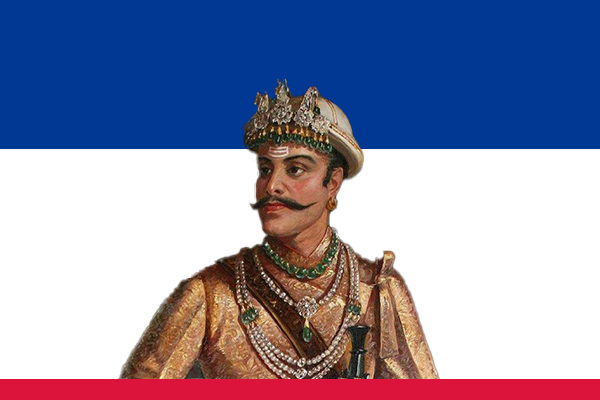
Early Life and Ascension to the Throne
King Rana Bahadur Shah was born in 1775 as the son of King Pratap Singh Shah and Queen Rajendra Laxmi. He ascended the throne of Nepal in 1777 at the young age of two after the death of his father. His mother, Queen Rajendra Laxmi, initially acted as regent, ruling the kingdom on his behalf until her death in 1785.
Early Reign and Influence of Regents
During his childhood, Rana Bahadur Shah lived under the guardianship of his uncles and court officials, who managed state affairs. His early reign witnessed political maneuvering among courtiers as they competed for influence. The young king grew up amidst palace intrigues, which shaped his personality and future decisions.
Assertion of Power
As he matured, Rana Bahadur Shah began asserting his authority over the government. He dismissed regents and took direct control of the kingdom. He implemented new administrative measures and sought to strengthen the monarchy’s influence. However, his assertive nature also created tension within the court and among the nobility.
Marriage and Political Controversy
Rana Bahadur Shah married multiple times, but his marriage to Kantavati Jha, a Maithili Brahmin widow, created significant political controversy. He broke traditional royal norms and openly declared Kantavati as his favorite queen. His decision sparked resentment among courtiers and religious leaders, leading to factionalism within the palace.
Abdication and Exile
In 1799, Rana Bahadur Shah abdicated the throne in favor of his son, Girvan Yuddha Bikram Shah, who was still a child. He moved to Varanasi, India, living in exile. During his stay, he engaged in political plotting to reclaim power. His actions caused instability in Nepal’s governance, and his supporters worked behind the scenes to prepare his return.
Return and Assassination
Rana Bahadur Shah returned to Nepal in 1804, determined to restore his power. He ruled as a de facto leader despite his son being the official king. However, his autocratic style and harsh punishments alienated many nobles. On April 25, 1806, during a heated quarrel, his stepbrother Sher Bahadur Shah assassinated him.
Legacy
King Rana Bahadur Shah remains one of Nepal’s most controversial monarchs. His reign reflected both reformist ambitions and personal flaws. Historians remember him for breaking traditions, challenging the aristocracy, and leaving a complex legacy in Nepal’s political history.