Sultan Yahya Petra
Reign: 21 September 1975 – 29 March 1979
Coronation: 28 February 1976
Home State: Kota Bharu
Lifespan: 1917 – 1979
Country: Malaysia
Image credits available here.
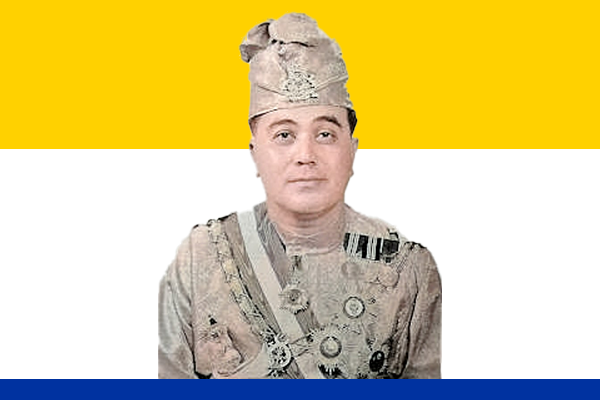
Early Life and Royal Background
Sultan Yahya Petra was born into the Kelantan royal household, where he received a traditional royal education combined with religious and administrative training. From an early age, he learned the responsibilities of leadership, Islamic teachings, and Malay customs. His upbringing emphasized discipline, humility, and respect for the rakyat (people), values that later shaped his approach as a ruler.
Growing up in Kelantan, he developed a strong bond with local culture and traditions. This connection allowed him to understand the everyday concerns of ordinary citizens while maintaining royal dignity.
Accession as Sultan of Kelantan
Sultan Yahya Petra ascended the throne of Kelantan during a period that demanded stability and moral leadership. As Sultan, he focused on preserving Islamic values, strengthening state administration, and promoting social harmony. He supported religious education and encouraged cooperation between traditional institutions and modern governance.
Under his rule, Kelantan maintained its strong cultural identity while adapting to national development goals. His leadership reflected patience and wisdom rather than authority alone.
Role as Yang di-Pertuan Agong of Malaysia
Sultan Yahya Petra later served as the Yang di-Pertuan Agong, the constitutional monarch of Malaysia. In this national role, he represented unity among the states and acted as a symbol of balance within the federal system. He fulfilled his duties with dignity, adhering strictly to the constitutional framework of the country.
As King, he emphasized harmony among Malaysia’s diverse communities. His speeches and public appearances consistently promoted peace, mutual respect, and loyalty to the nation. He avoided controversy and focused on his constitutional responsibilities, earning widespread respect across political and social lines.
Leadership Style and Personal Values
King Sultan Yahya Petra was known for his modest lifestyle and deep religious commitment. He believed that leadership was a trust from God and must be exercised with justice and compassion. Rather than seeking attention, he preferred quiet service and moral guidance.
His leadership style reflected Malay royal traditions that prioritize consensus, courtesy, and responsibility. This approach helped strengthen public confidence in the monarchy during his time.
Legacy and Historical Importance
The legacy of Sultan Yahya Petra lies in his dedication to constitutional monarchy, Islamic values, and national unity. He demonstrated how traditional leadership could coexist with modern democratic governance. His reign reinforced respect for the monarchy as a stabilizing institution in Malaysia.
Even after his passing, he is remembered as a king who ruled with sincerity and restraint. His life continues to inspire respect for tradition, faith, and service to the people.
Conclusion
King Sultan Yahya Petra remains a significant figure in Malaysian history. Through humility, wisdom, and devotion to duty, he strengthened both his state and the nation. His reign stands as an example of principled leadership rooted in culture, faith, and constitutional responsibility.