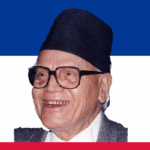
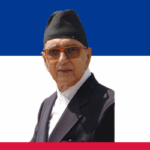
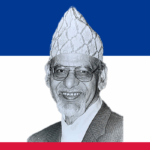
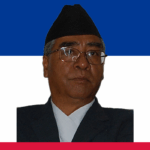
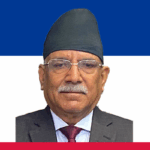
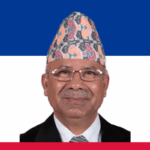
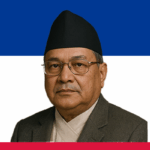
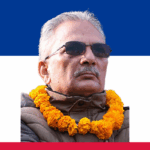
List of Prime Ministers of Nepal

The office of the Prime Minister of Nepal plays a crucial role in shaping the nation’s politics and governance. As the head of government, the Prime Minister exercises executive power, leads policy-making, and represents Nepal in international affairs. Over the years, the position has evolved alongside the country’s transition from monarchy to democracy.

LIST OF PRIME MINISTERS OF NEPAL

="timeline-item"
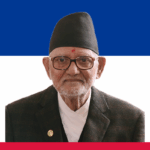
Surya Bahadur Thapa

Surya Bahadur Thapa (1928–2015) served as Nepal’s Prime Minister five times between 1963 and 2003, making him one of the country’s longest-serving leaders. He played a central role in shaping Nepal’s political transitions, promoting reforms, and balancing monarchy with democratic aspirations throughout his long political career.

="timeline-item"
Lokendra Bahadur Chand

Lokendra Bahadur Chand Thapa (1940–2022) served as Nepal’s Prime Minister four times, representing the Rastriya Prajatantra Party. A staunch monarchist, he supported the Shah monarchy and emphasized stability during political turbulence. Chand contributed to governance, constitutional development, and party leadership, leaving a lasting impact on Nepalese politics.

="timeline-item"
Krishna Prasad Bhattarai

Krishna Prasad Bhattarai (1924–2011) served as Prime Minister of Nepal and played a vital role in restoring democracy. As a founding leader of the Nepali Congress, he guided the nation during its transition from monarchy to multiparty democracy. Bhattarai emphasized democratic values, peace, and national unity throughout his political career.

="timeline-item"
Girija Prasad Koirala

Girija Prasad Koirala (1924–2010) served as Nepal’s Prime Minister multiple times and played a decisive role in the nation’s democratic transition. He led the Nepali Congress, advanced peace processes, and promoted constitutional reforms. Koirala’s leadership helped abolish monarchy and establish Nepal as a federal democratic republic.

="timeline-item"
Manmohan Adhikari

Manmohan Adhikari (1920–1999), Nepal’s first communist Prime Minister, served from 1994 to 1995. He promoted pro-people policies, rural development, and social welfare. Adhikari emphasized democratic socialism, transparency, and integrity in governance. His short tenure left a lasting impact on Nepalese politics, inspiring future generations of leftist leaders.

="timeline-item"
Sher Bahadur Deuba

Sher Bahadur Deuba, born on June 13, 1946, in Nepal, served multiple terms as Prime Minister. A leader of the Nepali Congress, he promoted democracy, peace, and development. Deuba played a key role in Nepal’s democratic transition and peace process, shaping the nation’s modern political landscape through resilience and negotiation.

="timeline-item"
Pushpa Kamal Dahal

Pushpa Kamal Dahal, born in 1954, is a Nepalese politician and leader of the Communist Party (Maoist Centre). Known as “Prachanda,” he led the decade-long Maoist insurgency. He served multiple terms as Nepal’s Prime Minister, promoting republicanism, peace, and social justice while shaping Nepal’s transition from monarchy to democracy.

="timeline-item"
Madhav Kumar Nepal

Madhav Kumar Nepal (1953–present) is a Nepali politician who served as the Prime Minister of Nepal from May 2009 to February 2011. A senior leader of the CPN (Unified Socialist) and former General Secretary of CPN-UML, he actively contributed to Nepal’s democratic movement and the drafting of the new constitution.

="timeline-item"
Jhala Nath Khanal

Jhala Nath Khanal (1950–Present) served as the 35th Prime Minister of Nepal from February to August 2011. A senior leader of the Communist Party of Nepal (UML), he played a crucial role in Nepal’s peace process and political transition, advocating democracy, federalism, and socio-economic reforms.

="timeline-item"
Baburam Bhattarai

Baburam Bhattarai (1954–present) is a Nepali politician, former Prime Minister (2011–2013), and a key leader in Nepal’s Maoist movement. A trained architect with a PhD in planning, he played a vital role in drafting Nepal’s republican constitution and remains influential in progressive politics and federal restructuring.

="timeline-item"
Sushil Prasad Koirala

Sushil Prasad Koirala (1939–2016) served as the Prime Minister of Nepal from 2014 to 2015. A leader of the Nepali Congress, he dedicated his career to democracy, peace, and constitutional development. Koirala played a key role in promulgating Nepal’s 2015 Constitution, leaving a lasting political legacy.

="timeline-item"
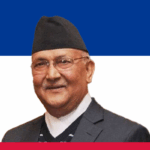
K. P. Sharma Oli

K. P. Sharma Oli (Born 1952) is a Nepali politician and former Prime Minister of Nepal. A leader of the Communist Party of Nepal (UML), he served multiple terms, focusing on nationalism, infrastructure, and foreign relations. Oli played a crucial role in Nepal’s 2015 Constitution and modern political transformation.

Establishment of the Office

The office of the Prime Minister in Nepal was established in 1846 when Jung Bahadur Rana assumed the role after the Kot Massacre. He initiated the powerful Rana regime, which centralized authority within his family. Since then, the role of the Prime Minister has transformed significantly, adapting to Nepal’s changing political landscape.

Famous Prime Ministers of Nepal

Jung Bahadur Rana

Jung Bahadur Rana became the first Prime Minister of Nepal in 1846. He consolidated power through the Rana dynasty, introduced administrative reforms, and strengthened Nepal’s foreign relations, particularly with Britain. His rule marked the beginning of over a century-long hereditary Rana prime ministership.

Bishweshwar Prasad Koirala

B. P. Koirala, Nepal’s first democratically elected Prime Minister, took office in 1959. As the leader of the Nepali Congress, he emphasized democracy, social justice, and economic modernization. Although King Mahendra dismissed his government in 1960, Koirala left a lasting legacy as a champion of democracy.

Lokendra Bahadur Chand

Lokendra Bahadur Chand served as Prime Minister multiple times during the 1980s and early 2000s. Representing the Rastriya Prajatantra Party, he remained a strong monarchist while navigating Nepal’s turbulent political changes. His leadership focused on maintaining stability during times of unrest.

Krishna Prasad Bhattarai

Krishna Prasad Bhattarai played an important role in restoring multiparty democracy after the 1990 People’s Movement. As Prime Minister, he emphasized democratic reforms, economic liberalization, and transparency in governance. His leadership symbolized Nepal’s democratic aspirations.

Girija Prasad Koirala

Girija Prasad Koirala served as Prime Minister several times, emerging as one of the most influential leaders in Nepal’s modern history. He played a crucial role in peacebuilding during the Maoist insurgency and in drafting Nepal’s new democratic framework. His leadership shaped Nepal’s democratic transition.

Pushpa Kamal Dahal “Prachanda”

Prachanda, leader of the Maoist movement, became Prime Minister in 2008 after the monarchy was abolished. He symbolized Nepal’s transition to a federal democratic republic. His leadership highlighted the shift from armed struggle to mainstream politics.

Conclusion

The Prime Ministers of Nepal have guided the nation through monarchy, political upheavals, and democratic reforms. From Jung Bahadur Rana’s autocratic regime to Prachanda’s republican leadership, each Prime Minister has left a distinct imprint on Nepal’s history. The office continues to evolve as Nepal strengthens its democratic institutions.
Back to top of page