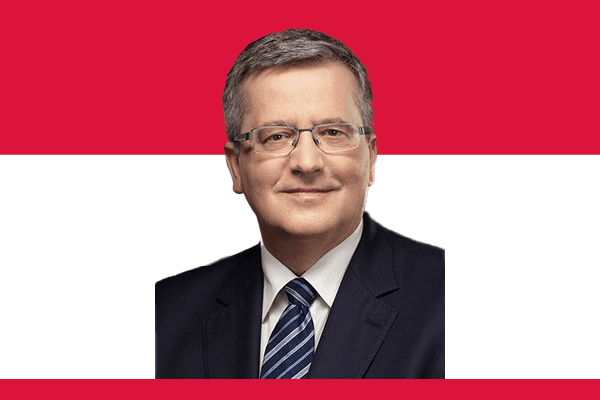
Early Life and Education
Bronisław Maria Komorowski was born on June 4, 1952, in Oborniki Śląskie, Poland. He came from a family with noble roots and strong patriotic traditions. During his youth, he showed interest in history, public affairs, and national identity. He later studied history at the University of Warsaw, where he developed a deeper understanding of Poland’s past and political struggles.
As a young man, Komorowski became involved in opposition activities during the communist period. He supported democratic movements and took part in efforts that challenged the authoritarian system. These experiences shaped his political values and strengthened his commitment to democracy and civil liberties.
Political Career
After the fall of communism in Poland, Bronisław Komorowski entered public life more actively. He joined the democratic political movement and gradually became one of the country’s experienced politicians. Over the years, he served in several important positions in the Polish government and parliament.
Komorowski worked as a member of the Sejm and built a reputation as a practical and reliable public servant. He also served as Minister of National Defence, where he focused on strengthening Poland’s armed forces and modernizing the country’s defense policies. His experience in defense later influenced his presidential priorities, especially in matters of national security and international alliances.
In 2007, he became Speaker of the Sejm. In this role, he gained greater national visibility and proved his ability to manage political debate during a period of coalition government. His leadership in parliament prepared him for even higher office.
Presidency of Poland
Bronisław Komorowski became Acting President in April 2010 after the sudden death of President Lech Kaczyński. Soon afterward, he ran in the presidential election and won, officially becoming President of Poland in August 2010. His election reassured many citizens who wanted political stability after the national tragedy.
As president, Komorowski promoted moderation and national unity. He encouraged cooperation between political institutions and supported Poland’s active participation in the European Union and NATO. He believed Poland should remain a strong and respected partner in both organizations.
During his presidency, he paid close attention to defense and security issues. He supported the modernization of the military and emphasized the importance of strong ties with Western allies. This approach became especially important as tensions in Eastern Europe increased.
Komorowski also supported democratic values, constitutional order, and dialogue between different political groups. He often presented himself as a president for all citizens rather than only for one political camp. His leadership style was less confrontational and more consensus-driven than that of some other political figures.
Legacy and Significance
Bronisław Komorowski’s presidency is remembered for stability, moderation, and institutional continuity. He led Poland during a sensitive period and helped the country maintain confidence at home and credibility abroad. While critics sometimes described him as cautious, supporters valued his calm and responsible leadership.
He lost the 2015 presidential election to Andrzej Duda, but his years in office remain significant in Poland’s democratic history. Komorowski represented a centrist and pro-European vision of Poland. His political career reflects decades of service, from anti-communist activism to the highest office in the land.
Conclusion
President Bronisław Komorowski stands out as a steady and experienced leader in modern Polish politics. His presidency focused on stability, security, and democratic cooperation. Through his moderate approach and long public service, he helped shape Poland during an important era of national and international change.