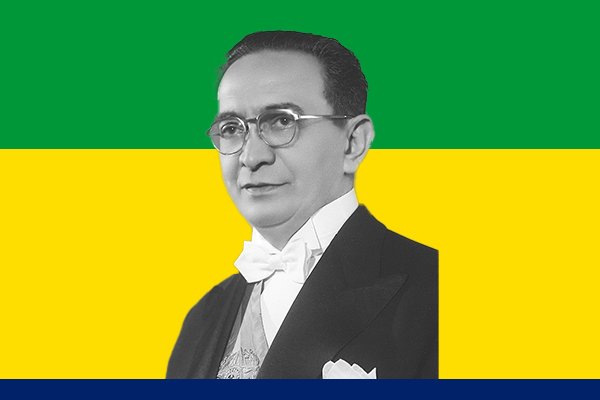
Early Life and Political Rise
Café Filho, born as João Fernandes Campos Café Filho on February 3, 1899, in Natal, Rio Grande do Norte, grew up in a modest family that valued education and civic duty. He began his career as a journalist, where he developed strong political views and a reputation for defending democratic principles. His sharp intellect and persuasive writing earned him public recognition. Motivated by his commitment to social justice, he entered politics and became a vocal advocate for labor rights and constitutional reforms.
He represented the interests of working-class citizens and became a member of the National Democratic Union (UDN). His early political success stemmed from his ability to connect with ordinary people and his belief in a fair and transparent government. His charisma and clarity of purpose helped him rise steadily in Brazil’s complex political landscape.
Role as Vice President
In 1950, Brazilians elected Getúlio Vargas as President and Café Filho as Vice President. As Vice President, Café Filho actively participated in national governance and frequently mediated between opposing political groups. He focused on economic stability and social welfare programs, which reflected his desire to reduce inequalities in Brazilian society.
Café Filho maintained close communication with Vargas and often advised him on matters concerning national unity and governance. He prioritized dialogue over confrontation and encouraged reforms that could balance Brazil’s economic growth with social progress. His political maturity and diplomatic approach made him an important figure in the Vargas administration.
Ascension to the Presidency
Café Filho assumed the presidency on August 24, 1954, after President Getúlio Vargas’s tragic death. The nation faced political turmoil, public grief, and uncertainty. As the new President, Café Filho took decisive steps to stabilize Brazil’s political and economic situation. He addressed the nation directly, assuring citizens of his commitment to democracy and constitutional order.
He quickly appointed capable ministers and introduced economic measures to control inflation. His administration strengthened financial institutions and sought to restore investor confidence. By acting swiftly and transparently, he helped calm the political unrest that followed Vargas’s death. His leadership emphasized continuity, stability, and respect for democratic norms.
Economic and Political Policies
Café Filho promoted fiscal discipline and encouraged international trade. He prioritized the modernization of Brazil’s industries and the development of infrastructure projects to boost productivity. His government worked to improve foreign relations and attract foreign investment.
Domestically, Café Filho advocated for political moderation. He supported reforms that aimed to balance economic liberalization with social responsibility. His administration promoted public works programs that created jobs and strengthened national morale. Through pragmatic leadership, he managed to steer Brazil away from potential chaos.
However, political divisions persisted. Café Filho faced opposition from groups that sought to influence his policies. He remained firm in defending constitutional authority and resisted attempts to destabilize his government. His calm and rational leadership allowed Brazil to navigate a fragile period without descending into authoritarian rule.
Health Crisis and Departure from Office
In 1955, Café Filho’s health deteriorated, forcing him to temporarily step aside from the presidency. Vice President Carlos Luz assumed office, but political tension soon led to a military intervention. Although Café Filho attempted to return to power, the Congress declared his position vacant to preserve national stability.
Despite these challenges, he accepted the decision peacefully and avoided escalating the crisis. His actions reflected his respect for democratic institutions and his desire to protect Brazil from further unrest. After leaving office, he retired from political life but remained respected for his integrity and moderation.
Legacy of Leadership
President Café Filho is remembered as a stabilizing figure who guided Brazil through one of its most delicate transitions. His presidency demonstrated the importance of calm leadership, constitutional respect, and national unity during political upheaval.
He believed that progress required both economic discipline and social compassion. Through his pragmatic decisions and unshaken commitment to democracy, Café Filho earned his place in Brazilian history as a leader who acted with responsibility and courage when his country needed it most.