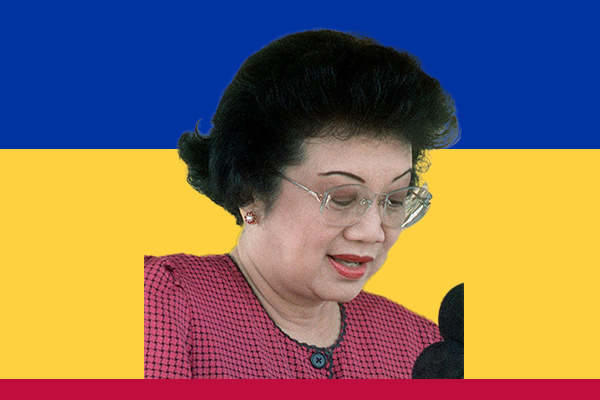
Corazon Aquino
In Office: 25 February 1986 – 30 June 1992
Political Party: Independent
Home State: Paniqui
Lifespan: 1933–2009
Country: Philippines
Image credits available here.
Early Life and Education
Corazon Cojuangco Aquino was born on January 25, 1933, in Tarlac, Philippines. She grew up in a wealthy and influential family known for its political and business background. Her parents valued education, so they sent her to St. Scholastica’s College in Manila and later to the United States. She earned a degree in French and Mathematics from Mount Saint Vincent College in New York. Despite her comfortable life, she remained humble and deeply religious, values that shaped her leadership style.
Marriage and Family Life
Cory married Benigno “Ninoy” Aquino Jr., a rising political figure known for his opposition to dictatorship. Their marriage brought together two influential families, but it also exposed her to the realities of politics. While Ninoy pursued his political career, Cory focused on raising their five children and supporting her husband from behind the scenes. Her quiet strength became evident during her husband’s imprisonment and exile during Ferdinand Marcos’s regime.
The Turning Point: Ninoy Aquino’s Assassination
In 1983, tragedy struck when Ninoy Aquino was assassinated upon returning to the Philippines from exile. The event shocked the nation and ignited widespread anger against the Marcos dictatorship. Cory transformed her grief into courage and stepped into the political arena. She became the symbol of opposition and unity, rallying millions of Filipinos to demand justice and democratic change.
Rise to the Presidency
In 1986, Corazon Aquino ran for president against Ferdinand Marcos in a snap election. Despite facing intimidation and electoral fraud, she stood firm in defending democracy. When Marcos declared himself the winner, Cory’s supporters launched the historic People Power Revolution, a peaceful uprising that toppled the dictatorship. On February 25, 1986, Cory Aquino took her oath as the 11th President of the Philippines and the first woman to hold the office.
Restoring Democracy
As president, Aquino focused on rebuilding democratic institutions. She abolished the repressive constitution of the Marcos era and introduced a new democratic charter in 1987. She freed political prisoners, restored press freedom, and reestablished the independence of the judiciary. Her administration worked to rebuild public trust and promote human rights.
Economic and Political Challenges
Cory faced serious economic difficulties and several coup attempts during her presidency. She inherited a bankrupt economy and widespread corruption from the previous regime. Despite these challenges, she implemented policies to revive agriculture, attract foreign investment, and encourage small businesses. Her calm leadership and moral authority helped maintain stability during turbulent times.
Advocacy for Peace and Social Justice
Aquino believed in reconciliation and peace. She initiated talks with communist insurgents and Muslim separatist groups to end decades of conflict. Although peace remained fragile, her commitment to dialogue laid the groundwork for future negotiations. She also promoted education, land reform, and rural development, aiming to uplift the lives of the poor.
Life After the Presidency
After leaving office in 1992, Corazon Aquino remained active in social and political causes. She supported democratic movements and served as a moral voice in the country’s public affairs. Even after retiring from politics, she inspired future generations to value integrity, faith, and civic responsibility. When she battled colon cancer later in life, the nation prayed for her recovery. She passed away on August 1, 2009, but her legacy endured in the hearts of millions.
Legacy of Leadership
President Corazon Aquino transformed Philippine politics through her courage and moral strength. She proved that peaceful revolution could restore democracy. Her presidency inspired women and ordinary citizens to believe in their power to create change. By leading with humility and faith, she earned global recognition as the “Mother of Philippine Democracy.”