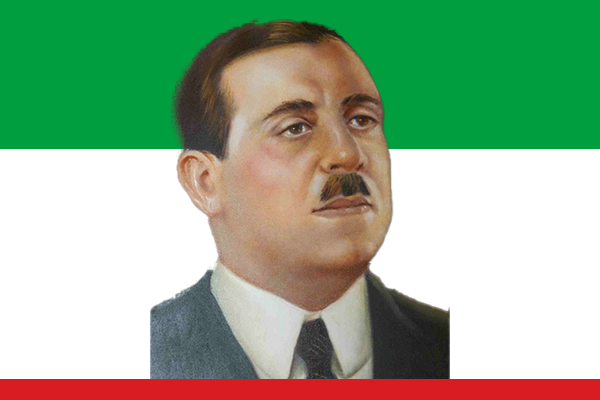
Early Life and Education
Émile Eddé came from a respected Maronite family. He pursued higher education in law at Saint Joseph University in Beirut, a Jesuit institution that had strong French cultural and intellectual influences. His education shaped his worldview, aligning him closely with French political ideals and legal traditions. After completing his studies, he practiced law and became involved in public life, gradually rising in political prominence.
During World War I, Eddé opposed Ottoman rule and was forced into exile due to his political views. Like many Lebanese nationalists of the time, he sought greater autonomy and later full independence for Lebanon. His exile strengthened his determination to advocate for Lebanon’s distinct identity separate from Syria and the broader Arab provinces of the Ottoman Empire.
Political Career and Presidency
After the defeat of the Ottoman Empire and the establishment of the French Mandate over Lebanon and Syria in 1920, Émile Eddé became an important political figure in the newly formed Greater Lebanon. He founded the National Bloc (Bloc National), a political party that supported close cooperation with France while promoting Lebanese independence within a constitutional framework.
In 1936, Émile Eddé was elected President of Lebanon by the Lebanese Parliament. His presidency coincided with the signing of the Franco-Lebanese Treaty of 1936, which aimed to grant Lebanon greater autonomy while maintaining a special relationship with France. Although the treaty was never fully ratified by the French Parliament, it marked a significant step toward eventual independence.
As president, Eddé worked to strengthen state institutions and promote administrative reforms. He emphasized stability, constitutional governance, and the preservation of Lebanon’s multi-religious character. However, his strong pro-French stance drew criticism from other Lebanese leaders who favored a more assertive nationalist approach and closer ties with the Arab world.
Challenges and Later Years
Émile Eddé’s presidency faced considerable challenges, particularly with the outbreak of World War II in 1939. The global conflict intensified political tensions within Lebanon and between local leaders and the French authorities. In 1941, during the Allied campaign in the Middle East, political shifts led to the end of his presidency.
Despite losing power, Eddé remained an influential figure in Lebanese politics for many years. His political legacy continued through his son, Raymond Eddé, who also became a notable Lebanese political leader.
Émile Eddé passed away on September 27, 1949. By the time of his death, Lebanon was on the path toward full independence, which it officially achieved in 1943. Although debates continue about his close alignment with France, many historians recognize his contributions to the development of Lebanon’s constitutional and political foundations.
Legacy
President Émile Eddé occupies an important place in Lebanon’s political history. He represented a generation of leaders who navigated the complex transition from Ottoman rule to French Mandate governance and eventually toward independence. His commitment to constitutional order, state-building, and the protection of Lebanon’s unique identity left a lasting imprint on the country’s political system. While opinions about his policies differ, his role in shaping early modern Lebanon remains significant.