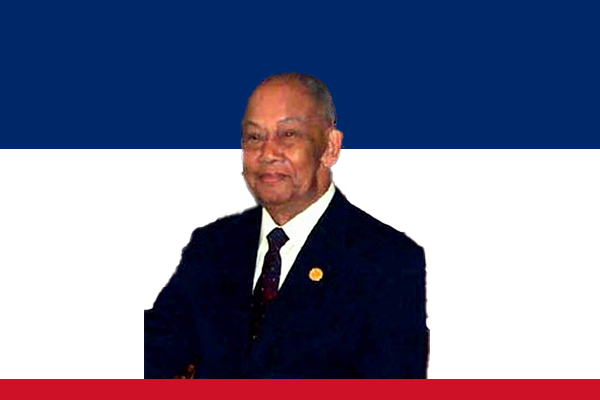
Early Life and Revolutionary Beginnings
Khamtai Siphandone was born on 8 February 1924 in Champasak Province, in southern Laos. He grew up during a period when Laos was under French colonial rule, a reality that deeply shaped his political outlook. From an early age, Khamtai became involved in anti-colonial activities and joined the revolutionary movement that sought independence and social transformation for the Lao people. His commitment to national liberation placed him among the early leaders who would later form the backbone of the Lao People’s Revolutionary Party (LPRP).
Role in the Lao People’s Revolutionary Party
Khamtai Siphandone emerged as a prominent figure within the LPRP during the decades-long struggle that culminated in the establishment of the Lao People’s Democratic Republic in 1975. He played a crucial role in military and political strategy, especially in southern Laos. His leadership style emphasized discipline, unity, and long-term planning, qualities that earned him respect within the party ranks. Over time, he became one of the most influential leaders shaping Laos’s post-revolutionary political structure.
Rise to National Leadership
Following the formation of the Lao People’s Democratic Republic, Khamtai Siphandone held several key positions in government and the party. He served as Deputy Prime Minister and later as Prime Minister from 1991 to 1998. During this period, Laos faced the challenge of transitioning from a centrally planned system toward a more market-oriented economy while maintaining socialist principles. Khamtai supported cautious economic reforms, prioritizing political stability and national unity over rapid change.
Presidency of Laos (1998–2006)
Khamtai Siphandone became President of Laos in 1998, succeeding Nouhak Phoumsavanh. His presidency marked a phase of consolidation rather than radical transformation. He focused on strengthening state institutions, maintaining internal stability, and guiding Laos through regional and global changes. Under his leadership, Laos deepened its engagement with neighboring countries and regional organizations, seeking economic cooperation while preserving sovereignty.
Economic and Foreign Policy Approach
As president, Khamtai Siphandone supported gradual economic liberalization under the New Economic Mechanism. He believed that controlled reforms could improve living standards without undermining the political system. Foreign policy under his tenure emphasized friendly relations with neighboring countries, especially Vietnam, China, and Thailand. He also encouraged diplomatic balance, allowing Laos to benefit from regional integration while avoiding entanglement in major power rivalries.
Leadership Style and Political Philosophy
Khamtai Siphandone was known for his pragmatic and reserved leadership style. He avoided populist rhetoric and instead relied on collective decision-making within the party. His political philosophy centered on stability, continuity, and the leading role of the LPRP. Supporters viewed him as a steady hand during a sensitive period of national development, while critics argued that his cautious approach limited political openness.
Retirement and Legacy
In 2006, Khamtai Siphandone stepped down from the presidency and from his position as General Secretary of the LPRP, marking a rare and orderly leadership transition in the region. His retirement symbolized continuity within Laos’s political system. Khamtai is remembered as one of the founding leaders of modern Laos, a revolutionary turned statesman who guided the country through war, reconstruction, and gradual reform.
Conclusion
President Khamtai Siphandone remains a central figure in Laotian history. His long political career reflects the evolution of Laos from a colonial territory to a socialist republic navigating modernization. Through cautious leadership and commitment to party unity, he left a lasting imprint on the nation’s political and economic path.