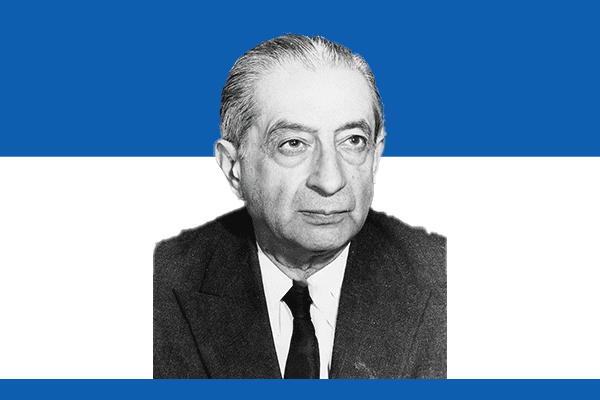
Early Life and Education
Konstantinos Tsatsos was born on July 1, 1899, in Athens, Greece. He grew up in a culturally rich environment that encouraged intellectual development. He studied law at the University of Athens and continued his education in Germany, where he focused on philosophy and legal theory. Instead of limiting himself to legal studies, he explored broader intellectual traditions, which later influenced his political ideas.
He began his academic career as a professor of administrative law. Through his lectures and writings, he actively contributed to Greek intellectual thought and promoted democratic values. His early career reflected a strong commitment to education and public service.
Political Career
Tsatsos entered politics with a clear vision for Greece’s future. He aligned himself with conservative and liberal-democratic ideals and worked closely with prominent leaders such as Konstantinos Karamanlis. During his political career, he held several important positions, including Minister of the Presidency.
Rather than remaining a passive observer, he actively participated in shaping national policies. He contributed to administrative reforms and supported the development of modern state institutions. His efforts strengthened governance and promoted stability in a country that often faced political uncertainty.
Role in Greek Democracy
Konstantinos Tsatsos played an essential role in restoring democracy in Greece after periods of political instability, including military rule. He supported constitutional governance and worked to ensure that democratic principles guided the nation’s political system.
In 1975, he became the first President of the Hellenic Republic after the fall of the military junta. As president, he actively upheld the constitution and ensured the smooth functioning of democratic institutions. He represented national unity and stability during a critical period in Greek history.
Presidency and Leadership
During his presidency (1975–1980), Tsatsos carried out ceremonial and constitutional duties with dedication. He worked closely with the government while maintaining the neutrality expected of a head of state. Instead of exercising direct political power, he used his position to safeguard democratic values and institutional integrity.
He strengthened Greece’s international image by representing the country in diplomatic engagements. His leadership helped build confidence in Greece’s democratic transition and encouraged cooperation with other nations.
Intellectual Contributions
Beyond politics, Tsatsos made lasting contributions as a writer and philosopher. He authored numerous works on law, philosophy, and culture. His writings reflected his deep understanding of European thought and his commitment to humanism and democracy.
He actively promoted cultural development and intellectual dialogue in Greece. His dual role as a scholar and politician distinguished him from many contemporaries and enriched his approach to governance.
Personal Life and Legacy
Konstantinos Tsatsos maintained a life dedicated to public service and intellectual pursuit. His legacy combines political leadership with scholarly achievement. He influenced generations of thinkers and policymakers through both his actions and writings.
He passed away on October 8, 1987, but his contributions continue to shape Greece’s political and cultural landscape. His role in establishing and supporting democratic institutions remains particularly significant.
Conclusion
Konstantinos Tsatsos stands as a key figure in Greece’s modern history. Through active leadership, intellectual engagement, and dedication to democracy, he helped guide the country through a transformative era. His work ensured that democratic values took root and continue to thrive in Greece.