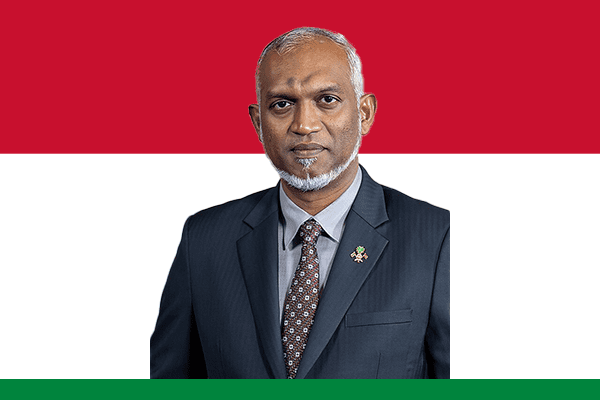
Early Life and Education
Mohamed Muizzu was born on 15 June 1978 in Malé, the capital city of the Maldives. He grew up in a society that was rapidly changing as the country expanded its tourism industry and modernized its infrastructure. From an early age, he showed strong interest in engineering and urban development.
Muizzu pursued higher education abroad and earned a degree in civil engineering. He later completed advanced studies in construction management and engineering-related fields. His technical background helped him develop practical solutions for urban planning and infrastructure challenges in the Maldives. This educational foundation later shaped many of his policies when he entered public service.
Political Career
Mohamed Muizzu began his political journey through administrative and technical roles in government. He gained national recognition when he served as Minister of Housing and Infrastructure under President Abdulla Yameen. During this period, Muizzu supervised several major development projects across the Maldives.
He played a key role in expanding housing programs, improving transportation systems, and modernizing urban infrastructure. Under his leadership, the government launched large construction projects that aimed to address population growth in Malé and nearby islands. Many citizens recognized his work in building bridges, roads, and housing units that improved everyday life.
Later, Muizzu served as the Mayor of Malé. As mayor, he focused on urban management, waste control, and city development. His administrative approach strengthened his popularity and prepared him for national leadership.
Presidency
In 2023, Mohamed Muizzu contested the presidential election as the candidate of the People’s National Congress coalition. His campaign emphasized economic independence, national sovereignty, and development-driven governance. He defeated incumbent President Ibrahim Mohamed Solih in the runoff election.
After taking office, Muizzu introduced policies aimed at strengthening the Maldivian economy and improving infrastructure across the archipelago. He advocated for balanced foreign relations and highlighted the importance of maintaining the Maldives’ independence in international affairs. His administration also focused on housing projects, transportation improvements, and tourism development.
Leadership Style and Policies
President Muizzu demonstrates a leadership style that prioritizes practical development and national interests. He often emphasizes infrastructure growth as a key driver of economic progress. His administration supports large-scale construction projects, improved transport links between islands, and expanded housing for Maldivian citizens.
Tourism remains the backbone of the Maldivian economy, and Muizzu aims to expand tourism infrastructure while protecting the country’s natural environment. He also promotes investment in renewable energy and sustainable development to address climate challenges facing the island nation.
Role in International Relations
As president, Muizzu manages diplomatic relations with major global and regional partners. The Maldives holds strategic importance in the Indian Ocean, so its foreign policy plays a critical role in regional stability. Muizzu has emphasized maintaining balanced partnerships while protecting the sovereignty of the Maldives.
He has also supported international cooperation on climate change, a major concern for the Maldives because rising sea levels threaten the country’s low-lying islands.
Conclusion
President Mohamed Muizzu has emerged as a prominent political leader in the Maldives. His career combines technical expertise, administrative experience, and political leadership. Through infrastructure development, economic planning, and diplomatic engagement, he continues to shape the future of the Maldives. His presidency represents a new phase in the nation’s political landscape as the country works toward sustainable development and stronger national independence.