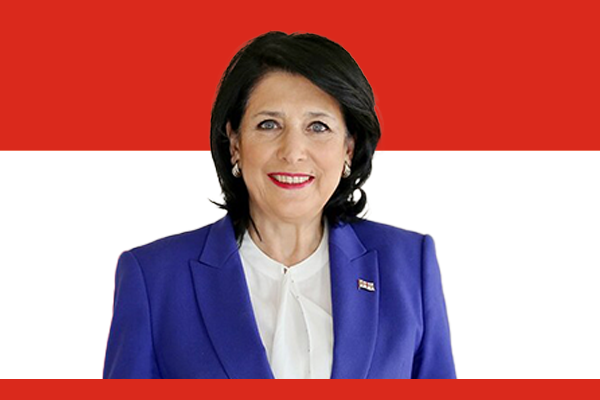
Early Life and Education
Salomé Zourabichvili was born on March 18, 1952, in Paris, France, to a family of Georgian political emigrants. Her parents had fled Georgia after the Soviet takeover in 1921. Growing up in France, she was deeply connected to Georgian culture and traditions despite living abroad.
She received her higher education at the prestigious Paris Institute of Political Studies (Sciences Po) and later attended Columbia University in the United States. Her academic training prepared her for a distinguished career in diplomacy and international relations.
Diplomatic Career in France
Zourabichvili began her professional career in the French diplomatic service in 1974. Over the next three decades, she held several important positions in French embassies around the world. She served in countries such as Italy, Chad, and the United States, gaining valuable experience in global diplomacy.
One of her most notable assignments came in 2003, when she was appointed as France’s ambassador to Georgia. This role was particularly meaningful to her because it connected her professional work with her ancestral homeland.
Entry into Georgian Politics
In 2004, she accepted an invitation from Georgian President Mikheil Saakashvili to become Georgia’s Minister of Foreign Affairs. After accepting Georgian citizenship, she played a key role in strengthening Georgia’s international relations and negotiating the withdrawal of Russian military bases from Georgian territory.
Despite her achievements, political disagreements led to her dismissal in 2005. However, she remained active in Georgian politics and later founded her own political movement.
Presidential Election and Historic Victory
In 2018, Salomé Zourabichvili ran for president as an independent candidate supported by the ruling Georgian Dream party. She won the election after a competitive runoff, becoming the first female president in Georgia’s history.
Her victory was historic not only because of her gender but also because she was the first president elected under Georgia’s new constitutional system, which reduced presidential powers and shifted more authority to the prime minister and parliament.
Presidency and Key Priorities
As president, Zourabichvili focused on strengthening Georgia’s democratic institutions, promoting national unity, and supporting European integration. She strongly advocated for Georgia’s closer ties with the European Union and NATO, viewing them as essential for the country’s security and development.
She also emphasized preserving Georgia’s independence and territorial integrity, particularly regarding regions affected by conflict.
Although the Georgian presidency became largely ceremonial under constitutional reforms, she remained an important symbol of national unity and international representation.
Challenges and Political Tensions
Her presidency was not without controversy. She faced criticism from political opponents and navigated tensions between the presidency and the government. Despite these challenges, she maintained her commitment to democratic values and Georgia’s Western orientation.
Her diplomatic experience helped her represent Georgia effectively on the international stage.
Legacy and Significance
Salomé Zourabichvili’s presidency represents a historic chapter in Georgia’s political development. As the country’s first female president, she broke gender barriers and inspired many women in Georgian politics.
Her long diplomatic career, international experience, and dedication to Georgia’s independence have made her an important figure in the nation’s modern history.