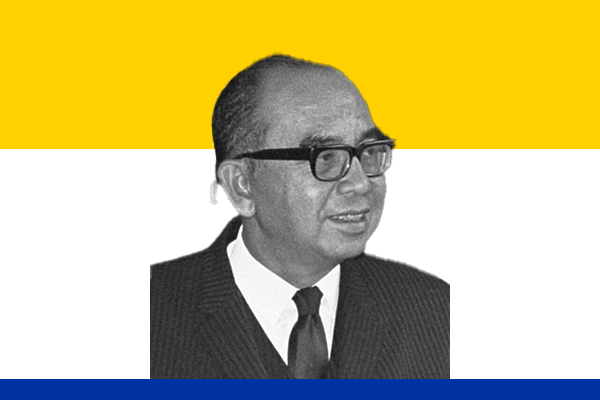
Early Life and Education
Abdul Razak Hussein was born on 11 March 1922 in Pahang, Malaya. He grew up in a family deeply connected to public service, which shaped his sense of responsibility toward society from an early age. He received his early education in Malaya and later pursued higher studies in law in the United Kingdom. During his student years, he developed a strong interest in nationalism and anti-colonial movements, which influenced his political thinking. His education not only gave him legal knowledge but also exposed him to global ideas of governance, democracy, and social justice.
Entry into Politics
Abdul Razak Hussein entered politics at a young age and quickly became an important figure in Malaya’s struggle for independence. He joined the United Malays National Organisation (UMNO) and played a crucial role in mobilizing support for self-rule. His dedication and leadership abilities helped him rise rapidly within the party. After Malaya achieved independence in 1957, he took on several key ministerial roles, including Minister of Education and Minister of Rural Development, where he began shaping policies aimed at improving the lives of ordinary citizens.
Role as Deputy Prime Minister
Before becoming Prime Minister, Abdul Razak Hussein served as the first Deputy Prime Minister of Malaysia under Tunku Abdul Rahman. In this position, he gained valuable experience in national administration and policy-making. He focused strongly on rural development, agriculture, and education, believing that national progress depended on uplifting the rural population. His efforts helped reduce regional inequalities and strengthened the administrative structure of the young nation.
Prime Ministership and Leadership
Abdul Razak Hussein became the second Prime Minister of Malaysia in 1970 during a challenging period following the racial riots of 1969. He took office with a clear vision of restoring national unity and political stability. His leadership style was practical, disciplined, and people-oriented. He emphasized consensus-building and worked to heal divisions within Malaysian society.
New Economic Policy
One of Abdul Razak Hussein’s most significant contributions was the introduction of the New Economic Policy (NEP). This policy aimed to reduce poverty and restructure society to eliminate the identification of race with economic function. Through the NEP, he sought to create a more balanced and inclusive economy by improving education, employment opportunities, and income distribution. The policy became a cornerstone of Malaysia’s long-term development strategy and shaped the country’s economic direction for decades.
Foreign Policy and International Relations
In foreign affairs, Abdul Razak Hussein adopted a pragmatic and independent approach. He strengthened Malaysia’s relationships with neighboring countries and promoted regional cooperation. He also worked to establish diplomatic relations with a wider range of nations, enhancing Malaysia’s international standing. His balanced foreign policy helped secure peace and stability in Southeast Asia during a period of global political tension.
Legacy and Impact
Abdul Razak Hussein passed away in 1976, but his legacy remains deeply embedded in Malaysia’s political and economic framework. He is remembered as the “Father of Development” for his tireless efforts to modernize the nation and improve the welfare of its people. His policies laid the foundation for long-term growth, national unity, and social stability. Abdul Razak Hussein’s vision, dedication, and leadership continue to inspire Malaysian politics and governance today.