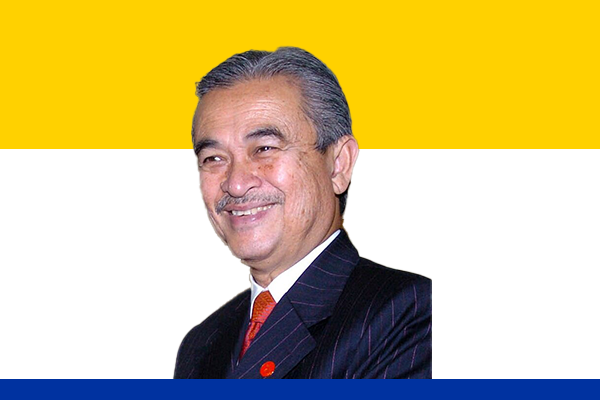
Mr. Abdullah Ahmad Badawi
In Office: 31 October 2003 – 2 April 2009
Political Party: Barisan Nasional
Home State: Bayan Lepas
Lifespan: 1939–2025
Country: Malaysia
Image credits available here.
Early Life and Political Background
Abdullah Ahmad Badawi was born on 26 November 1939 in Penang, Malaysia, into a family deeply rooted in religious scholarship and public service. His grandfather was a respected Islamic scholar, which influenced Abdullah’s lifelong interest in Islamic values and moderation. He studied Islamic Studies at the University of Malaya, equipping him with a strong academic foundation.
He began his career in the civil service before entering politics. In 1978, he became a Member of Parliament and gradually rose within the United Malays National Organisation (UMNO). Over the years, he held several important ministerial portfolios, including education, defense, and foreign affairs, which prepared him for national leadership.
Rise to the Office of Prime Minister
Abdullah Ahmad Badawi became Prime Minister in October 2003 following the retirement of Mahathir Mohamad. His appointment was widely welcomed, as many Malaysians expected a more open, transparent, and people-focused government. In the 2004 general election, he led the ruling coalition to a landslide victory, one of the strongest electoral performances in Malaysia’s history.
This overwhelming mandate reflected public confidence in his promise to fight corruption, strengthen institutions, and improve governance.
Vision and Leadership Style
Abdullah’s leadership style was soft-spoken, consultative, and rooted in moral principles. He introduced the concept of Islam Hadhari, or Civilizational Islam, which promoted a progressive, moderate, and development-oriented interpretation of Islam. This approach aimed to balance religious values with modern economic and social progress.
He emphasized good governance, accountability, and transparency, encouraging civil servants and political leaders to act ethically. His administration sought to reduce corruption and improve public sector efficiency, although results were mixed due to internal resistance and political challenges.
Economic and Social Policies
Under Abdullah Ahmad Badawi, Malaysia focused on strengthening human capital and knowledge-based growth. He invested in education, agriculture, and rural development, aiming to reduce inequality between urban and rural areas. He also supported small and medium enterprises as drivers of economic growth.
In agriculture, his government promoted modernization and food security, recognizing the sector’s importance to national stability. Socially, Abdullah encouraged interfaith dialogue and national unity, reinforcing Malaysia’s multicultural identity.
Challenges and Criticism
Despite his positive intentions, Abdullah faced criticism for being indecisive and for allowing factionalism within his party. Rising fuel prices, economic pressures, and perceptions of weak leadership affected public confidence. In the 2008 general election, the ruling coalition suffered significant losses, signaling declining support for his administration.
These challenges ultimately led to increased pressure for leadership change within UMNO.
Resignation and Legacy
In 2009, Abdullah Ahmad Badawi stepped down as Prime Minister, handing over power to Najib Razak. His resignation marked the end of a leadership era centered on moderation and ethical governance.
Abdullah’s legacy remains that of a principled and sincere leader who sought to humanize politics and governance. While his administration faced limitations, his emphasis on integrity, moderate Islam, and inclusive development continues to influence Malaysia’s political discourse.
Conclusion
Prime Minister Abdullah Ahmad Badawi played a significant role in shaping Malaysia during a period of transition. His calm leadership, moral vision, and commitment to moderation distinguished him in Malaysian history. Though not without challenges, his contributions reflect an earnest effort to guide the nation with integrity and balance.