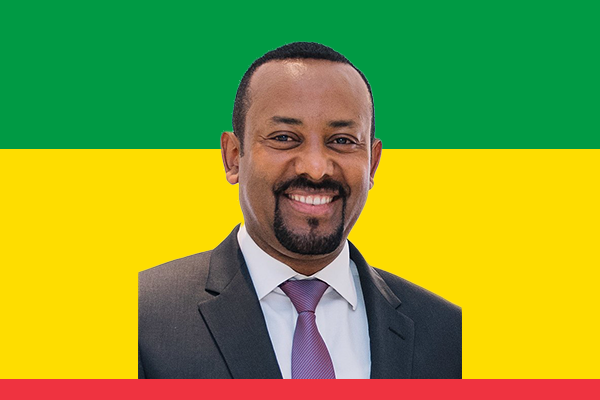
Early Life and Education
Abiy Ahmed was born on August 15, 1976, in Beshasha, a small town in the Oromia region of Ethiopia. He grew up in a multicultural family that valued tolerance and hard work. His father was Muslim, and his mother was Christian, which exposed him to Ethiopia’s diverse traditions. Abiy showed curiosity and discipline from an early age, qualities that shaped his leadership style.
He pursued higher education with determination, earning a bachelor’s degree in computer engineering. Later, he obtained a master’s degree in transformational leadership and change. His passion for learning led him to earn a Ph.D. in peace and security studies, where he focused on conflict resolution and governance.
Military and Intelligence Career
Abiy began his career in the Ethiopian military as a radio operator during the final stages of the Ethiopian Civil War. His technical skills and leadership abilities helped him rise through the ranks quickly. He played a vital role in the Ethiopian army’s communications department and later joined the intelligence services.
In the Information Network Security Agency (INSA), he worked to strengthen Ethiopia’s cybersecurity and technological capabilities. His experience in intelligence operations gave him deep insight into national security issues and state administration.
Entry into Politics
Abiy Ahmed entered politics through the Ethiopian People’s Revolutionary Democratic Front (EPRDF), the ruling coalition at the time. His reputation for discipline, innovation, and problem-solving earned him respect among political leaders. He served as a Member of Parliament and later as Minister of Science and Technology, where he promoted innovation and digital transformation.
In 2018, Ethiopia faced growing political unrest, ethnic tensions, and economic challenges. When Prime Minister Hailemariam Desalegn resigned, Abiy emerged as a reformist candidate capable of uniting the nation. Parliament elected him as Prime Minister on April 2, 2018.
Reform Agenda and National Transformation
As Prime Minister, Abiy Ahmed launched sweeping reforms to modernize Ethiopia. He released political prisoners, legalized banned opposition groups, and expanded freedom of the press. His actions symbolized a break from Ethiopia’s authoritarian past.
Abiy introduced economic reforms that encouraged private investment, particularly in telecommunications, energy, and infrastructure. He prioritized women’s empowerment by appointing a gender-balanced cabinet, including Ethiopia’s first female president. His government also focused on improving education, healthcare, and youth employment opportunities.
Peace with Eritrea and Nobel Prize
Abiy Ahmed achieved one of his most remarkable successes in foreign policy by restoring peace with neighboring Eritrea. For two decades, both nations had suffered from border conflicts and diplomatic isolation. Abiy reached out to Eritrean President Isaias Afwerki and signed a peace agreement in 2018.
This bold move ended years of hostility and reopened borders, earning Abiy international praise. In recognition of his efforts to promote peace and regional stability, the Nobel Committee awarded him the Nobel Peace Prize in 2019.
Challenges and Internal Conflicts
Despite his achievements, Abiy faced significant challenges. Ethiopia’s complex ethnic diversity created tensions in several regions. The Tigray conflict tested his leadership and commitment to national unity. He launched military operations to restore order, while also emphasizing reconciliation and reconstruction.
Abiy’s government worked to rebuild trust among communities and stabilize the economy. He continued to promote Ethiopia’s vision of prosperity through the “Homegrown Economic Reform Plan,” which sought to enhance productivity, infrastructure, and investment.
Vision for the Future
Abiy Ahmed envisions Ethiopia as a peaceful, self-reliant, and technologically advanced nation. He encourages citizens to embrace unity, innovation, and resilience. His leadership emphasizes dialogue, national pride, and sustainable development.
Through his initiatives, Ethiopia has strengthened its regional influence and modernized its governance systems. Abiy continues to balance reform, security, and growth as he leads the country toward a more stable and prosperous future.
Legacy and Influence
Prime Minister Abiy Ahmed transformed Ethiopia’s political landscape by combining visionary ideas with decisive action. His leadership style blends optimism with pragmatism, inspiring both supporters and critics. By promoting peace, reform, and modernization, he positioned Ethiopia as a symbol of progress in Africa.