Mr. Amangeldy Muraliyev
In Office: 12 April 1999 – 21 December 2000
Political Party: Independent
Home State: Manas
Lifespan: born 1947
Country: Kyrgyzstan
Image credits available here.
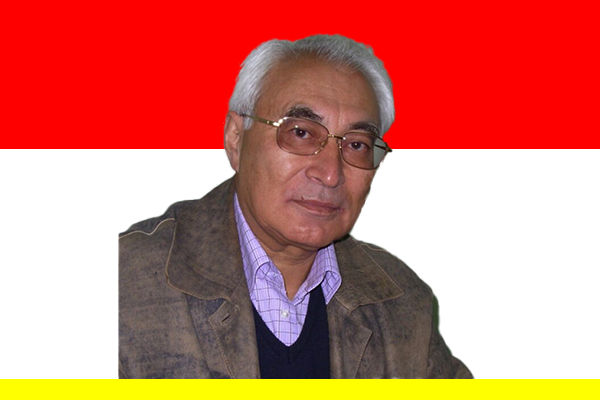
Early Life and Education
Amangeldy Muraliyev was born in 1939 in Kazakhstan, during a time when the region was part of the Soviet Union. He grew up in an environment shaped by Soviet political, economic, and social structures, which strongly influenced his early worldview. From a young age, Muraliyev showed an aptitude for administration and public service. He pursued higher education in economics and management-related fields, gaining the technical and ideological training required for a career within the Soviet administrative system. His academic background prepared him for responsibilities in planning, governance, and economic oversight, skills that later proved vital during Kazakhstan’s transition years.
Early Career and Rise in Government
Muraliyev began his professional career within Soviet-era economic and governmental institutions. Like many officials of his generation, he advanced steadily through regional and republican administrative posts. He worked in various economic management roles, where he became known for his disciplined approach and understanding of industrial and agricultural planning. These positions allowed him to build experience in managing large bureaucracies and coordinating between central authorities and local administrations.
During the late Soviet period, Muraliyev held senior roles within Kazakhstan’s government structures. As political reforms and economic restructuring intensified in the late 1980s and early 1990s, he emerged as a capable administrator able to navigate complex institutional changes. His reputation as a pragmatic and steady official helped him gain the confidence of political leaders during a period marked by uncertainty and rapid transformation.
Appointment as Prime Minister
Amangeldy Muraliyev was appointed Prime Minister of Kazakhstan in 1994, a crucial moment in the country’s post-independence history. Kazakhstan had declared independence in 1991, and by the mid-1990s it faced serious economic challenges, including inflation, declining industrial output, and social hardship caused by the collapse of the Soviet economic system. Muraliyev assumed office with the task of stabilizing governance and supporting the transition toward a market-oriented economy.
As Prime Minister, Muraliyev worked under President Nursultan Nazarbayev and played a supporting role in implementing presidential policies. His tenure was characterized by efforts to maintain continuity in administration while adapting to new political and economic realities. He focused on managing state institutions, coordinating economic reforms, and addressing urgent fiscal and social issues.
Policies and Governance
Muraliyev’s government dealt primarily with economic management during a difficult adjustment period. His administration worked on controlling inflation, reforming state enterprises, and laying the groundwork for privatization. Although these reforms were often painful for the population, they were considered necessary steps toward long-term economic stability.
He also emphasized maintaining social order and ensuring that essential state functions continued despite limited resources. Muraliyev’s leadership style was generally viewed as cautious and administrative rather than overtly political. He prioritized functionality and coordination across ministries, aiming to prevent institutional breakdown during the transition phase.
Challenges and Resignation
The challenges facing Muraliyev’s government were immense. Economic decline, unemployment, and public dissatisfaction placed pressure on the administration. As reforms progressed, political leadership sought new approaches and personnel to accelerate change. In 1995, Muraliyev’s term as Prime Minister came to an end, marking a transition to a new phase in Kazakhstan’s governance.
His departure did not reflect personal scandal but rather the evolving political and economic strategy of the leadership. Like many officials of the early independence period, Muraliyev served during a time when rapid change often led to frequent government reshuffles.
Legacy and Historical Significance
Amangeldy Muraliyev is remembered as a transitional Prime Minister who helped guide Kazakhstan through one of the most difficult phases of its modern history. While his tenure was relatively short, it occurred at a critical juncture when administrative stability was essential. His experience, discipline, and technocratic approach contributed to maintaining government continuity during economic upheaval.