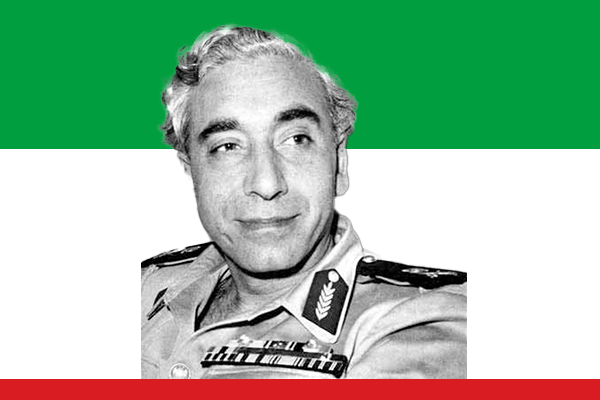
Amin al-Hafez was an important political and military figure in Syria during the 1960s. Born in 1921 in Aleppo, Syria, he grew up during a period of political change and national struggle. Syria was under French mandate during his early years, and like many young Syrians of his generation, al-Hafez developed strong nationalist views. He later joined the Syrian Military Academy and became an officer in the Syrian Army. His military background played a key role in shaping his political career.
Al-Hafez became closely associated with the Arab Socialist Ba’ath Party, which promoted Arab unity, socialism, and freedom from foreign influence. The Ba’ath Party gained strength in Syria during the late 1950s and early 1960s. In 1963, a military coup brought the Ba’ath Party to power in Syria. Following this event, Amin al-Hafez emerged as one of the leading figures in the new government.
In July 1963, Amin al-Hafez became Prime Minister of Syria. Soon after, he also served as President of Syria, combining strong executive authority with his military leadership. His time in office was marked by major political reforms and significant challenges. The Ba’ath government introduced socialist economic policies, including land reforms and nationalization of key industries. These reforms aimed to reduce inequality and strengthen state control over the economy. Supporters believed these changes would modernize Syria and promote social justice.
However, the reforms also faced opposition. Many business owners and landowners were unhappy with the nationalization policies. Political tensions grew within the Ba’ath Party itself. There were disagreements between moderate members and more radical factions. Amin al-Hafez tried to maintain balance, but internal divisions continued to weaken the government.
During his leadership, Syria’s foreign policy focused on Arab nationalism. The government supported the idea of Arab unity and maintained strong relations with other Arab nationalist movements. However, relations with neighboring countries were often tense. Regional rivalries and ideological differences created instability in the Middle East. Syria’s relationship with Egypt, especially after the collapse of the United Arab Republic (a union between Egypt and Syria from 1958 to 1961), remained complex during al-Hafez’s rule.
Amin al-Hafez’s leadership style was firm and influenced by his military experience. He believed in strong central authority to protect the revolution and maintain order. However, this approach sometimes led to political repression and strict control over opposition groups. Critics argued that democratic freedoms were limited during this period.
In February 1966, a major internal coup took place within the Ba’ath Party. A more radical faction removed Amin al-Hafez from power. He was arrested and later went into exile. This event marked the end of his political leadership in Syria. The coup also deepened divisions within the Ba’ath Party and reshaped Syria’s political direction.
After many years abroad, Amin al-Hafez eventually returned to Syria later in his life. He remained a significant historical figure, remembered for his role during a critical period in Syria’s development. His leadership reflected the hopes and struggles of a nation seeking stability, unity, and progress during a time of regional change.
In conclusion, Prime Minister Amin al-Hafez played a central role in Syria’s political history during the 1960s. As both a military officer and political leader, he helped shape the country’s socialist reforms and Arab nationalist policies. While his tenure faced internal conflicts and ended with a coup, his influence remains part of Syria’s modern historical narrative.