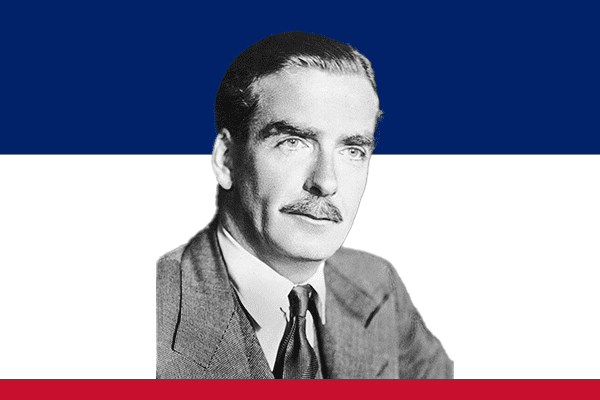
Mr. Anthony Eden
In Office: 6 April 1955 – 9 January 1957
Political Party: Conservative
Home State: Rushyford
Lifespan: 1897–1977
Country: United Kingdom
Image credits available here.
Early Life and Education
Anthony Eden was born on 12 June 1897 in Windlestone Hall, County Durham, England. His full name was Robert Anthony Eden. He came from an aristocratic family and received his education at Eton College, one of Britain’s most famous schools. Later, he studied Oriental languages at Christ Church, Oxford, but his education was interrupted by the First World War. During the war, he served in the British Army and fought with courage on the Western Front. His wartime experience shaped his views on international relations and the importance of peace and diplomacy.
Entry into Politics
After the war, Eden entered politics as a member of the Conservative Party. In 1923, he was elected as Member of Parliament for Warwick and Leamington. From the beginning of his political career, he showed strong interest in foreign affairs. His intelligence, confidence, and skill in debate quickly brought him attention within the Conservative Party. During the 1930s, he rose steadily in government and gained recognition as a capable young politician.
Rise as Foreign Secretary
Anthony Eden became famous mainly because of his work in foreign policy. In 1935, he was appointed Foreign Secretary. At a time when Europe faced growing tensions, he took a firm stand against dictators such as Benito Mussolini and Adolf Hitler. He supported collective security and believed Britain should resist aggressive expansion by fascist powers. In 1938, he resigned from the government because he disagreed with Prime Minister Neville Chamberlain’s policy of appeasement toward Italy and Germany. This resignation increased his popularity because many people saw him as a principled leader.
During the Second World War and after it, Eden returned to high office. He again served as Foreign Secretary under Winston Churchill and later under other Conservative governments. He played a major role in shaping Britain’s post-war diplomacy and represented the country in many international meetings. His experience made him one of the most respected diplomats of his generation.
Prime Minister of the United Kingdom
In April 1955, Anthony Eden succeeded Winston Churchill as Prime Minister of the United Kingdom. Many people had expected him to become Prime Minister for years. He won the general election of 1955 and began his premiership with strong public support. Eden was seen as polished, experienced, and highly capable. However, his period in office soon faced serious international difficulties.
The Suez Crisis
The most important and controversial event of Anthony Eden’s premiership was the Suez Crisis of 1956. Egyptian President Gamal Abdel Nasser nationalized the Suez Canal, a waterway of great strategic and economic importance to Britain and France. Eden believed Nasser threatened British influence in the Middle East. In response, Britain and France secretly planned military action with Israel.
The operation quickly turned into a political disaster. Although British and French forces initially achieved military objectives, the United States and the Soviet Union strongly opposed the intervention. International pressure forced Britain to withdraw. The crisis badly damaged Britain’s global standing and showed that the country could no longer act as a great imperial power without American support. Eden’s judgment was heavily criticized both at home and abroad.
Resignation and Legacy
The failure of the Suez Crisis deeply harmed Anthony Eden’s health and political reputation. In January 1957, he resigned as Prime Minister, officially because of ill health. Harold Macmillan succeeded him. After leaving office, Eden largely retired from public life, though he later wrote memoirs about his political career.
Anthony Eden died on 14 January 1977. Historians still debate his legacy. Many admire his earlier courage in opposing appeasement and his distinguished service as Foreign Secretary. Others remember him mainly for the Suez Crisis, which became one of the greatest failures in modern British foreign policy. Despite this, Anthony Eden remains a significant figure in British history, representing both the strengths and limits of Britain’s post-war leadership.
Conclusion
Anthony Eden was a talented diplomat and a major Conservative leader who devoted much of his life to public service. His early career and foreign policy work earned widespread respect, but his premiership was overshadowed by the Suez Crisis. His story is important because it reflects Britain’s changing role in the world during the twentieth century.