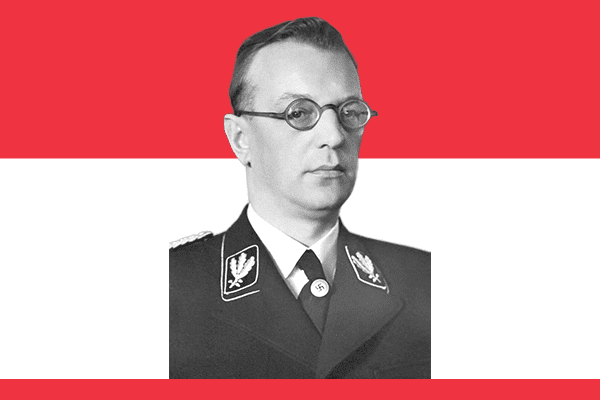
Early Life and Education
Arthur Seyss-Inquart was born on July 22, 1892, in Stonařov, which was then part of the Austro-Hungarian Empire. His family later moved to Vienna, where he spent most of his childhood. He studied law at the University of Vienna and became a successful lawyer.
During World War I, he served in the Austro-Hungarian Army. The war influenced his political views and increased his interest in German nationalism. After the war, he continued practicing law while becoming involved in nationalist political movements in Austria.
Rise in Austrian Politics
In the 1930s, Seyss-Inquart joined groups that supported closer ties between Austria and Germany. He admired Adolf Hitler and supported Nazi ideology. As political tensions increased in Austria, he gained influence within pro-Nazi circles.
In 1938, Nazi Germany pressured Austria into accepting political changes that favored German control. Seyss-Inquart became Austria’s Minister of the Interior and later Chancellor for a short period. He directly assisted Hitler during the Anschluss, the annexation of Austria by Germany. German troops entered Austria soon afterward, and Austria became part of Nazi Germany.
His support for the annexation strengthened Hitler’s power in Central Europe and ended Austria’s independence.
Role During World War II
After Germany occupied several European countries, Seyss-Inquart received important administrative positions within the Nazi regime. In 1939, Hitler appointed him Deputy Governor-General of occupied Poland. There, he helped implement Nazi policies that oppressed local populations.
In 1940, he became Reich Commissioner for the occupied Netherlands. During his rule, he enforced strict Nazi laws and crushed resistance movements. He ordered harsh punishments against opponents and supported deportations of Dutch Jews to concentration camps.
Thousands of people suffered under his administration. Jewish families lost their homes, freedoms, and lives because of Nazi racial policies that he actively enforced. Resistance groups in the Netherlands strongly opposed his leadership, but Seyss-Inquart continued carrying out German orders.
He also supported forced labor programs that sent civilians to work for Germany during the war. His administration used fear, arrests, and violence to maintain control over occupied territories.
Fall of Nazi Germany
As World War II neared its end, Allied forces liberated occupied territories across Europe. Nazi Germany collapsed in 1945, and Allied authorities arrested Seyss-Inquart shortly afterward.
The Allies charged him with war crimes and crimes against humanity during the Nuremberg Trials. Prosecutors presented evidence showing his involvement in deportations, persecution, and oppressive rule in occupied countries.
During the trial, Seyss-Inquart attempted to defend his actions by claiming he followed orders and tried to reduce suffering. However, the court rejected these arguments because evidence clearly showed his active role in Nazi policies.
Trial and Execution
The International Military Tribunal found Arthur Seyss-Inquart guilty of war crimes and crimes against humanity. The court sentenced him to death.
On October 16, 1946, authorities executed him by hanging in Nuremberg, Germany. His execution marked the end of one of the major political figures connected to Nazi occupation policies during World War II.
Legacy
Arthur Seyss-Inquart remains remembered as a key collaborator of Nazi Germany. Historians consider him responsible for supporting dictatorship, persecution, and wartime oppression. His actions in Austria, Poland, and the Netherlands contributed to suffering and destruction during the war.
The Nuremberg Trials established an important legal precedent by holding leaders accountable for crimes against humanity. Seyss-Inquart’s conviction demonstrated that political leaders could face justice for their actions during wartime.