Mr. Dmitry Medvedev
In Office: 8 May 2012 – 16 January 2020
Political Party: United Russia
Home State: Saint Petersburg
Lifespan: born 1965
Country: Russia
Image credits available here.
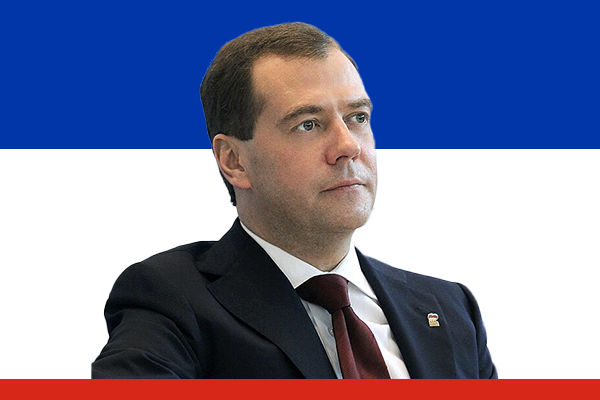
Early Political Career
Medvedev began his political career in the early 1990s, actively working with prominent Russian politicians and shaping policy initiatives in Saint Petersburg. He collaborated with Vladimir Putin during this period, contributing to the city’s administrative reforms and economic projects. His dedication to governance and reform earned him recognition, and he soon moved into federal politics, demonstrating his commitment to modernizing Russia’s political and economic systems.
Presidency of Russia
In 2008, Dmitry Medvedev became the President of Russia. During his tenure, he actively implemented reforms aimed at modernizing Russia’s economy, judiciary, and civil society. He emphasized the need for technological advancement, launching initiatives to promote innovation and digital infrastructure. Medvedev actively advocated for anti-corruption measures and judicial reform, ensuring that governance became more transparent and accountable. Internationally, he actively engaged in diplomacy, improving Russia’s relations with Europe and the United States and participating in major global negotiations on security and energy.
Prime Minister of Russia
After serving as President, Medvedev became Prime Minister in 2012, a role in which he actively oversaw Russia’s economic policies and domestic administration. He guided government programs to enhance social welfare, infrastructure development, and industrial modernization. Medvedev actively coordinated with regional leaders, ensuring that federal policies reached all parts of the country effectively. He also actively represented Russia in international economic forums, strengthening trade relations and promoting investment opportunities.
Economic and Policy Initiatives
As Prime Minister, Medvedev actively promoted policies to diversify Russia’s economy and reduce dependency on oil and gas revenues. He supported small and medium-sized enterprises, technological innovation, and digitalization projects. Medvedev actively introduced regulatory reforms to improve the business environment, making Russia more competitive globally. Additionally, he consistently emphasized the importance of education, science, and technology in fostering sustainable development and long-term growth.
Diplomacy and International Relations
Medvedev actively participated in global diplomacy, representing Russia at the G20, BRICS, and other international platforms. He strengthened Russia’s partnerships with Asia, Europe, and the Middle East, negotiating agreements on trade, energy, and security. His diplomatic efforts actively advanced Russia’s strategic interests while maintaining dialogue with major world powers. Medvedev’s pragmatic approach to international relations highlighted his belief in cooperation, economic growth, and geopolitical stability.
Legacy and Continuing Influence
Even after multiple terms in high-level office, Medvedev actively engages in politics, public policy discussions, and legal reforms. He frequently delivers speeches, publishes articles, and participates in governmental advisory roles. His career demonstrates active leadership, strategic planning, and a commitment to modernizing Russia’s political and economic systems. Medvedev’s work leaves a lasting impact on domestic governance and international relations, reflecting his role as one of Russia’s most influential contemporary politicians.
Dmitry Medvedev’s career illustrates active political leadership, strategic vision, and dedication to reform. From his early work in Saint Petersburg to his roles as President and Prime Minister, Medvedev actively shaped Russia’s policies, leaving a significant mark on the nation’s development and global presence.