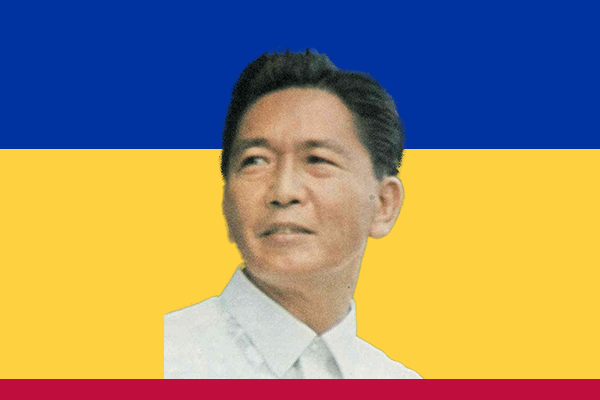
Mr. Ferdinand Marcos
In Office: 12 June 1978 – 30 June 1981
Political Party: New Society Movement
Home State: Sarrat
Lifespan: 1917–1989
Country: Philippines
Image credits available here.
Early Life and Education
Ferdinand Edralin Marcos was born on September 11, 1917, in Sarrat, Ilocos Norte, Philippines. His father, Mariano Marcos, worked as a lawyer and politician, while his mother, Josefa Edralin, served as a teacher. Marcos displayed intelligence and determination from a young age. He studied law at the University of the Philippines, where he excelled academically and graduated with top honors in 1939. His early success marked the beginning of an ambitious journey in public life.
Military Service and Early Political Career
When World War II broke out, Marcos joined the Philippine Army and claimed to have fought bravely against Japanese forces. After the war, he used his military reputation to build political influence. In 1949, he won a seat in the House of Representatives and began crafting a career built on discipline and national pride. His powerful speeches and strategic decisions quickly elevated his position within Philippine politics.
Rise to National Leadership
In 1965, Ferdinand Marcos ran for president under the Nacionalista Party. He campaigned on promises of progress, national unity, and economic growth. His message resonated with voters, and he won the election decisively. As president, he prioritized infrastructure, rural development, and agricultural modernization. He built roads, bridges, and schools across the country, portraying himself as a visionary leader focused on modernization.
Declaration of Martial Law
In 1972, Marcos declared Martial Law, claiming it was necessary to restore order and combat communist insurgencies. Under this rule, he dissolved Congress, restricted media freedom, and controlled the judiciary. He centralized power and extended his leadership beyond constitutional limits. Although he justified Martial Law as a means to secure peace and progress, it led to widespread human rights violations and political repression. His rule symbolized both stability and fear.
Role as Prime Minister
In 1978, the Philippines adopted a parliamentary system, and Ferdinand Marcos assumed the title of Prime Minister while remaining president. He combined executive and legislative powers, making him one of the most dominant leaders in Philippine history. Marcos used his authority to implement policies that strengthened his control over the military and economy. He also promoted infrastructure programs, energy development, and national defense. However, his administration faced accusations of corruption, cronyism, and misuse of public funds.
Economic and Political Challenges
Despite his early economic initiatives, the nation suffered from increasing debt and inflation during the 1980s. The country’s wealth gap widened, and the public grew frustrated with corruption and mismanagement. Political opposition gained strength, demanding democratic reforms and accountability. Marcos tried to maintain authority through propaganda and military loyalty, but growing unrest eroded his legitimacy.
The 1986 People Power Revolution
In 1983, the assassination of opposition leader Benigno Aquino Jr. sparked outrage across the nation. The event united various sectors of society against Marcos. In 1986, after a controversial election marked by allegations of fraud, millions of Filipinos joined the People Power Revolution in Manila. The peaceful uprising forced Marcos to flee the country after more than two decades in power. His departure ended an era defined by both development and dictatorship.
Exile and Death
After his ouster, Ferdinand Marcos lived in exile in Hawaii with his family. He continued to claim that his rule benefited the Philippines, defending his decisions until his death on September 28, 1989. Despite the controversies, he remained a polarizing figure, admired by some for his nationalism and criticized by others for his authoritarianism.
Legacy and Impact
Ferdinand Marcos left a complex legacy that still divides public opinion. Supporters praise his vision for national development, infrastructure growth, and political strength. Critics remember his regime for corruption, human rights abuses, and suppression of democracy. His era reshaped Philippine politics, influencing future leaders and movements. Whether viewed as a patriot or a dictator, Marcos’ leadership profoundly impacted the nation’s political and social identity.