Early Life and Education
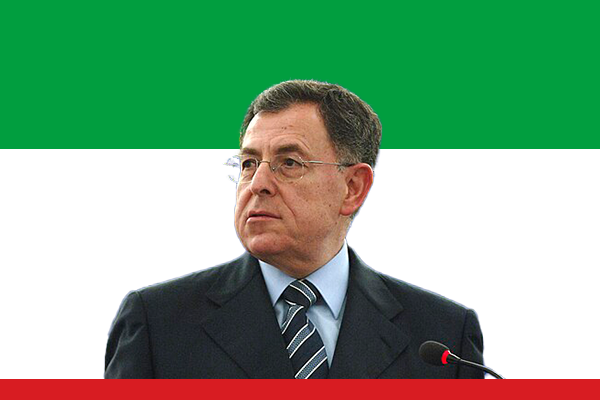
Fouad Siniora completed his higher education at the American University of Beirut, earning a degree in Business Administration. His strong background in finance laid the foundation for his future political career. Before entering high-level politics, he worked in banking and financial management, gaining a reputation for professionalism and economic insight. His association with Rafic Hariri, a leading political and business figure in Lebanon, marked a turning point in his career.
Role as Finance Minister
Siniora first gained national prominence when he served as Lebanon’s Minister of Finance in the 1990s under Rafic Hariri’s government. During this period, Lebanon was rebuilding after a long and devastating civil war (1975–1990). Siniora was deeply involved in shaping fiscal policies aimed at reconstruction and economic reform. He worked on stabilizing public finances and attracting international investment to restore confidence in Lebanon’s economy.
Although reconstruction efforts led to economic growth, they also increased public debt, which later became a major issue. Siniora’s fiscal policies were often debated, with supporters praising his reformist approach and critics questioning the sustainability of debt-driven development.
Appointment as Prime Minister
After the assassination of Rafic Hariri in February 2005, Lebanon faced a severe political crisis. Later that year, Fouad Siniora was appointed Prime Minister. His government was formed during a period of heightened tensions, both domestically and regionally. He was aligned with the March 14 Alliance, a coalition advocating for Lebanese sovereignty and reduced foreign influence.
Siniora’s tenure as Prime Minister was marked by significant challenges. In 2006, Lebanon experienced a devastating conflict between Israel and Hezbollah. The war caused widespread destruction, particularly in southern Lebanon and Beirut’s southern suburbs. Siniora played a central diplomatic role during the crisis, appealing to the international community for support and working toward a ceasefire.
The 2006 Lebanon War and Aftermath
During the 2006 war, Siniora addressed the nation and the international community with emotional appeals, emphasizing Lebanon’s sovereignty and the need for peace. His government worked closely with the United Nations to implement Security Council Resolution 1701, which helped end hostilities and deployed international peacekeeping forces in southern Lebanon.
Post-war reconstruction became a priority. Siniora sought international financial assistance and organized donor conferences to secure funding for rebuilding damaged infrastructure. However, political divisions deepened within Lebanon, leading to protests and a prolonged political deadlock.
Political Crisis and Resignation
Between 2006 and 2008, Lebanon faced a severe internal political crisis. Opposition groups withdrew from the cabinet, accusing Siniora’s government of being unconstitutional. Tensions escalated into clashes in May 2008. The crisis was eventually resolved through the Doha Agreement, which paved the way for a new government and presidential election.
Siniora remained Prime Minister until 2009, when a new government was formed following parliamentary elections. Despite the controversies and political polarization during his tenure, he was credited with maintaining governmental continuity during extremely difficult times.
Legacy and Influence
Fouad Siniora’s legacy remains closely tied to Lebanon’s post-civil war reconstruction era and the challenges of governing a deeply divided country. Supporters regard him as a steady and pragmatic leader who defended Lebanon’s sovereignty and worked tirelessly for economic reform. Critics argue that his fiscal policies contributed to long-term financial instability.
After leaving office, Siniora continued to play a role in Lebanese politics as a member of parliament and a senior figure within the Future Movement. His career reflects Lebanon’s complex political landscape, shaped by sectarian balance, regional tensions, and economic pressures.
In summary, Fouad Siniora stands as a significant figure in Lebanon’s contemporary political history. His leadership during war, political upheaval, and economic strain demonstrates both the resilience and the difficulties of governance in Lebanon.