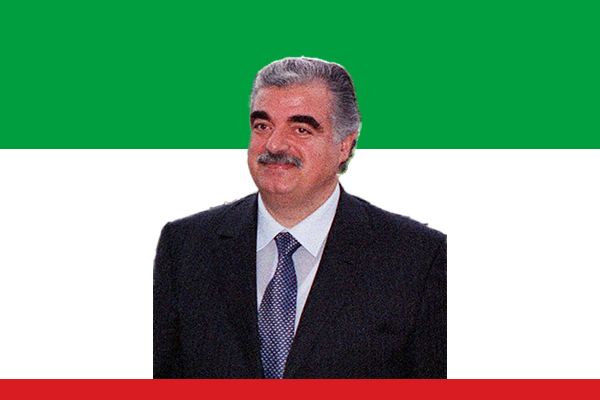
Prime Minister Rafic Hariri: Lebanon’s Visionary Leader
Rafic Baha ed-Din Hariri (1944–2005) was one of Lebanon’s most influential political figures, known for his role in the country’s post-civil war reconstruction and his impact on Lebanon’s economic and political landscape. Born in Sidon, a historic port city in southern Lebanon, Hariri was the son of a modest family. Early on, he displayed entrepreneurial ambition, working in his father’s small construction business before moving to Saudi Arabia in the 1960s, where he would eventually build a vast business empire.
In Saudi Arabia, Hariri founded the Saudi Oger construction company, which grew into one of the largest firms in the Middle East. His business acumen and strategic connections allowed him to amass significant wealth, while also cultivating relationships with political and economic leaders in the region. Despite his success abroad, Hariri maintained a deep connection to Lebanon, committed to contributing to its reconstruction and development once the country stabilized after years of civil war.
Hariri’s political career formally began in the 1980s when Lebanon was emerging from the devastation of its 15-year civil war. In 1992, he was appointed Prime Minister in a controversial election under the auspices of Syrian influence, a decision that sparked both hope and criticism. Hariri was determined to rebuild Lebanon’s shattered infrastructure and restore Beirut as a center of finance, commerce, and culture. He launched an ambitious urban renewal project, often referred to as “Horizon 2000,” which included the reconstruction of downtown Beirut, modernization of transportation networks, and revitalization of Lebanon’s banking and tourism sectors. These initiatives significantly boosted Lebanon’s economy and attracted international investors, though critics argued that the projects favored elite interests and increased public debt.
Hariri’s tenure was also marked by efforts to navigate Lebanon’s complex sectarian political system. As a Sunni Muslim leader, he sought to maintain a balance between the country’s various religious communities, including Maronite Christians, Shiites, and Druze. His approach often relied on consensus-building and close cooperation with regional powers, including Syria and Saudi Arabia. Hariri’s political influence grew steadily, and he became a symbol of Lebanon’s post-war reconstruction and a voice for economic modernization.
However, his leadership faced constant challenges, including allegations of corruption, political rivalries, and the persistent presence of Syrian influence in Lebanese politics. Hariri’s relationship with Syria, initially cooperative, eventually became strained as he advocated for greater Lebanese sovereignty. This tension culminated in the events of 2005, when Hariri was assassinated in a massive car bombing in Beirut, an act that shocked Lebanon and the international community. His death triggered widespread protests, known as the Cedar Revolution, which ultimately led to the withdrawal of Syrian troops from Lebanon.
Rafic Hariri’s legacy remains complex and enduring. He is remembered as a visionary leader who sought to restore Lebanon’s economic and political stability while facing immense challenges in a deeply divided society. His efforts in reconstruction, urban development, and economic reform shaped modern Lebanon, and his assassination highlighted the fragility of the country’s political environment. Hariri’s family continued his political work, with his son, Saad Hariri, becoming a prominent political figure and serving multiple terms as Prime Minister.
Rafic Hariri’s life embodies the intersection of business, politics, and national identity. His contributions to Lebanon’s reconstruction and governance left a lasting imprint, defining him as one of the country’s most significant and transformative leaders of the late 20th and early 21st centuries.