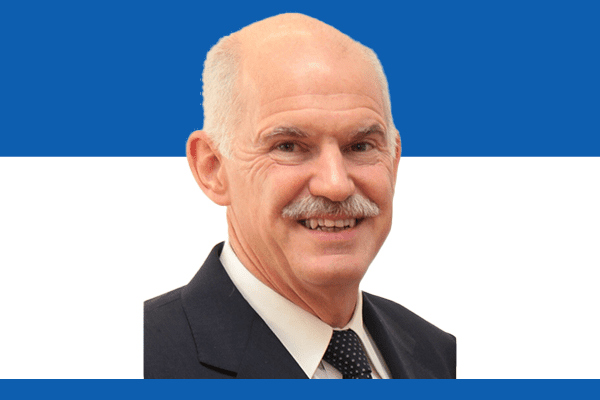
Mr. George Papandreou
In Office: 6 October 2009 – 11 November 2011
Political Party: Panhellenic Socialist Movement
Home State: Saint Paul
Lifespan: born 1952
Country: Greece
Image credits available here.
Early Life and Education
George Papandreou was born on June 16, 1952, in St. Paul, Minnesota, USA, into a powerful political family. His father, Andreas Papandreou, and his grandfather, George Papandreou Sr., both served as Prime Ministers of Greece. Growing up in such an environment shaped his political outlook from an early age.
He pursued higher education in sociology and political science at institutions in the United States, Canada, and the United Kingdom. Instead of remaining confined to academic theory, he actively engaged with global political ideas, which later influenced his leadership style and reformist agenda.
Political Career Beginnings
George Papandreou entered Greek politics in the 1980s as a member of the Panhellenic Socialist Movement (PASOK), founded by his father. He quickly established himself as a forward-thinking politician. He held several ministerial positions, including Minister of Education and Minister of Foreign Affairs.
As Foreign Minister, he actively improved Greece’s relations with neighboring countries, particularly Turkey. His diplomatic efforts earned international praise and demonstrated his commitment to peace and cooperation. Rather than maintaining traditional rivalries, he worked to build bridges and foster dialogue.
Prime Minister of Greece
In 2009, George Papandreou became Prime Minister of Greece after his party won the general elections. He took office at a time when the country faced a severe financial crisis. Instead of avoiding difficult decisions, he confronted the economic realities and revealed the true extent of Greece’s fiscal problems.
He introduced austerity measures and sought international financial assistance from organizations such as the International Monetary Fund and the European Union. These actions aimed to stabilize the economy but also sparked widespread public protests and criticism.
Papandreou actively attempted to implement structural reforms, improve transparency, and combat corruption. Despite his efforts, economic hardships led to declining public support. In 2011, he resigned as Prime Minister amid political pressure and social unrest.
Leadership Style and Contributions
George Papandreou consistently demonstrated a reform-oriented and participatory leadership style. He encouraged citizen involvement in governance and promoted digital transparency initiatives. He also supported environmental sustainability and social justice.
Beyond national politics, he remained active on the global stage. He participated in international forums and advocated for democratic governance and cooperation. His work with organizations like the Socialist International further highlighted his commitment to progressive values.
Personal Life
George Papandreou married Ada Papandreou, and together they have children. Despite his demanding political career, he maintained a relatively private personal life. He is known for his interest in technology, fitness, and environmental issues.
He also engaged with academic and policy institutions, sharing his experiences and insights on global governance and economic challenges.
Legacy and Impact
George Papandreou’s legacy remains closely tied to Greece’s financial crisis. While critics blame his policies for deepening austerity, supporters argue that he took necessary steps to prevent economic collapse. He showed political courage by addressing difficult truths and making tough decisions.
His contributions to diplomacy, transparency, and democratic reform continue to influence Greek politics. He remains an important figure in discussions about leadership during times of crisis.
Conclusion
George Papandreou played a significant role in modern Greek history through active leadership and reform-driven policies. He confronted economic challenges head-on and promoted democratic values throughout his career. Despite controversies, his efforts left a lasting impact on Greece and international politics.