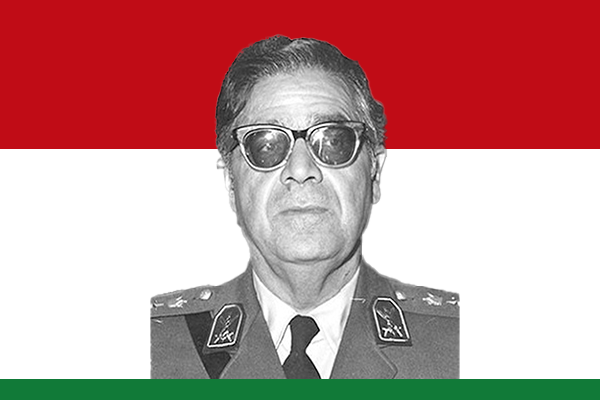
Early Life and Military Foundations
Gholam Reza Azhari was born in 1912 in Shiraz, and he grew up in a family that valued discipline and public service. He joined the Imperial Iranian Army at a young age, and he embraced military training with determination. Over the years, he advanced through Iran’s military ranks because he displayed strategic thinking, loyalty, and administrative strength. His superiors recognized his commitment to modernizing Iran’s armed forces, and they entrusted him with key command and staff responsibilities. Azhari’s long military career shaped his leadership style and prepared him for the challenges he later faced on the national stage.
Rise to High Military Command
During the 1960s and 1970s, Azhari played an increasingly influential role in Iran’s security establishment. He earned the respect of the Shah, who valued experienced officers capable of maintaining stability during a period of rapid modernization. Azhari commanded major units, supervised military planning, and contributed to national defense strategies. His disciplined approach and calm demeanor allowed him to handle sensitive issues with caution and control. When political unrest began spreading across Iran in the late 1970s, the Shah relied more heavily on the counsel of experienced military leaders like Azhari.
Appointment as Prime Minister
In November 1978, amid escalating protests and widespread civil unrest, the Shah appointed Gholam Reza Azhari as Prime Minister. Azhari accepted the role at a time when Iran was experiencing a profound political crisis. He formed a military-backed government and attempted to restore order while proposing measures to address public grievances. Because he believed that dialogue might ease tensions, he encouraged communication between the government and various political groups. However, the situation on the ground continued to deteriorate as strikes and demonstrations gained momentum throughout the country.
Efforts to Stabilize the Country
As prime minister, Azhari tried to balance firmness with negotiation. He directed security forces to maintain public safety while also acknowledging the need for political reforms. He urged government ministries to operate transparently and emphasized reducing corruption, which had become a major source of frustration for many Iranians. Despite these intentions, his administration struggled to overcome the growing revolutionary fervor. The country’s economy weakened under nationwide strikes, and political movements continued to challenge the monarchy. Azhari’s government found it increasingly difficult to manage the scale of unrest and the speed at which opposition forces mobilized.
Resignation and Later Life
Azhari resigned in early January 1979 after suffering health complications and recognizing that his government could no longer control the escalating crisis. His resignation marked one of the final steps before the collapse of the Pahlavi monarchy. After leaving office, he traveled to the United States for medical treatment and remained there following the revolution. He lived quietly in exile, reflecting on a lifetime of military service and leadership during one of Iran’s most turbulent periods. Gholam Reza Azhari passed away in 2001, leaving behind a legacy shaped by duty, discipline, and the formidable challenges he confronted during the final months of the Shah’s rule.
Legacy
Gholam Reza Azhari’s tenure as prime minister remains closely tied to the dramatic final chapter of the Pahlavi era. Historians continue to examine his brief administration to understand the complexities of Iran’s political crisis in 1978. Although he served only a short time, his leadership offers insight into the difficulties of governing a nation undergoing profound social and political transformation.