Mr. Henry Campbell-Bannerman
In Office: 5 December 1905 – 3 April 1908
Political Party: Liberal
Home State: Mayfair
Lifespan: 1836–1908
Country: United Kingdom
Image credits available here.
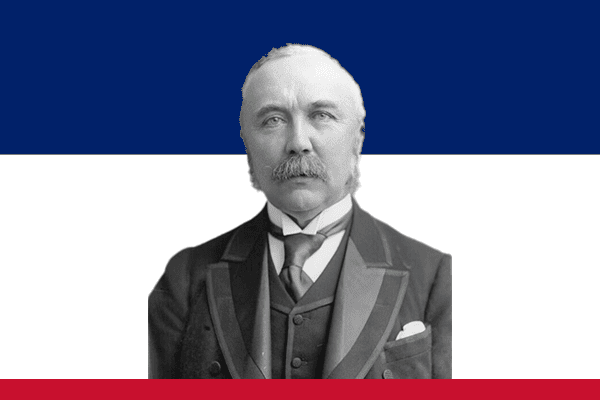
Early Life and Political Career
Henry Campbell-Bannerman was born on 7 September 1836 in Glasgow, Scotland. He studied at the University of Glasgow and later at Trinity College, Cambridge. After completing his education, he joined his family’s business and soon became interested in politics.
In 1868, voters elected Campbell-Bannerman as a Member of Parliament for Stirling Burghs. In the House of Commons, he quickly gained a reputation as a thoughtful and moderate Liberal politician. Over the following decades, he served in several government positions, including Financial Secretary to the War Office and Secretary of State for War. Through these roles, he developed strong administrative experience and gained respect within the Liberal Party.
Leadership of the Liberal Party
In 1899, Campbell-Bannerman became leader of the Liberal Party. At that time, the party faced divisions and declining political influence. He worked patiently to reunite party members and rebuild public trust.
One of his most notable positions involved his opposition to the Second Boer War. While many politicians supported the war enthusiastically, Campbell-Bannerman criticized the British government’s conduct, especially its treatment of civilians in concentration camps. His moral stance strengthened his reputation as a principled leader who valued justice and humanitarian ideals.
Becoming Prime Minister
In December 1905, Campbell-Bannerman became Prime Minister after the Conservative government resigned. Soon afterward, the Liberal Party won a landslide victory in the 1906 general election. This overwhelming electoral success gave his government a strong mandate to introduce reforms.
As Prime Minister, Campbell-Bannerman supported policies that improved social conditions and strengthened democratic governance. His administration reduced military spending, promoted free trade, and encouraged social welfare reforms. Although many major welfare reforms were introduced later under leaders such as David Lloyd George and H. H. Asquith, Campbell-Bannerman created the political environment that made these changes possible.
Domestic and Foreign Policies
Campbell-Bannerman’s government focused on reducing poverty and improving working conditions. His leadership encouraged reforms in education, labor rights, and social welfare programs. He also supported greater self-government for colonies and promoted peaceful diplomacy.
During his time in office, he maintained a cooperative relationship with King Edward VII. He preferred negotiation and moderation rather than confrontation in political matters. This approach helped maintain stability during a time of political change.
Final Years and Legacy
Campbell-Bannerman’s health began to decline in 1907. Despite his illness, he continued to lead the government until April 1908, when he resigned from office. He died shortly afterward on 22 April 1908.
Historians remember Campbell-Bannerman as a transitional but important prime minister. He guided the Liberal Party back to power, strengthened democratic institutions, and encouraged progressive reforms. His leadership style emphasized honesty, fairness, and respect for parliamentary traditions.