Mr. Julius Raab
In Office: 2 April 1953 – 11 April 1961
Political Party: Austrian People’s Party
Home State: Sankt Pölten
Lifespan: 1891–1964
Country: Austria
Image credits available here.
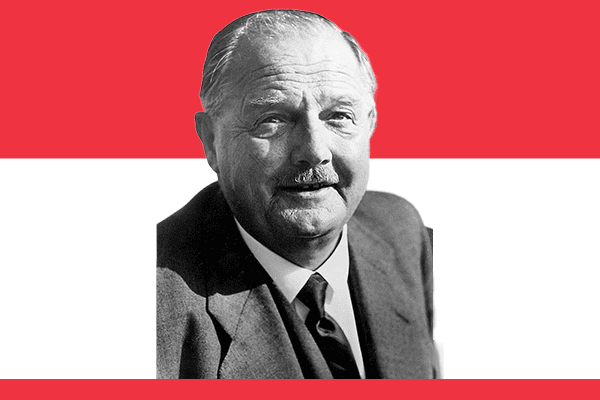
Early Life and Education
Julius Raab was born on November 29, 1891, in St. Pölten, Austria. He grew up in a middle-class family and developed an early interest in engineering and politics. He studied civil engineering at the Technical University of Vienna and later worked as an engineer. His technical education shaped his practical approach to leadership and problem-solving.
During World War I, Raab served in the Austrian Army. After the war, he became involved in political and economic organizations. He supported Christian social values and joined political groups that later influenced Austrian national politics.
Political Career
Raab began his political journey in the Christian Social Party, one of Austria’s major political organizations during the early twentieth century. He focused on economic development and represented the interests of workers, businesses, and industrial groups.
After World War II, Austria faced severe economic and political difficulties. Cities had suffered destruction, industries struggled, and foreign powers occupied the country. Julius Raab joined efforts to rebuild the nation and became a leading member of the Austrian People’s Party.
In 1953, he became Chancellor of Austria. He led the government during a crucial period in Austrian history and worked tirelessly to restore the country’s sovereignty.
Leadership as Chancellor
As Chancellor, Julius Raab focused on economic recovery, national unity, and diplomatic progress. He encouraged cooperation between political parties and promoted social harmony. Instead of creating division, he supported compromise and consensus.
One of Raab’s greatest achievements came in 1955 when Austria regained full independence through the Austrian State Treaty. The treaty ended Allied occupation and restored Austria as a sovereign nation. Raab played a central role in negotiations with the United States, the Soviet Union, the United Kingdom, and France.
Austria also adopted permanent neutrality in 1955. Raab strongly supported this policy because he believed neutrality would protect Austria from Cold War conflicts. His diplomatic efforts strengthened Austria’s international reputation and ensured peace and stability.
Economic Development
Julius Raab contributed significantly to Austria’s economic growth. He encouraged industrial expansion, infrastructure development, and cooperation between employers and workers. Under his leadership, Austria experienced rapid economic improvement and rising living standards.
Raab promoted the concept of “social partnership,” where business leaders, labor unions, and government officials worked together to solve economic issues. This cooperative model reduced labor conflicts and helped Austria achieve long-term prosperity.
His government invested in roads, housing, and public services, improving daily life for Austrian citizens. Through active economic planning and practical policies, Raab helped transform Austria into a stable and successful European country.
Personal Qualities and Leadership Style
Julius Raab earned admiration for his calm personality and diplomatic skills. He listened carefully to different viewpoints and preferred negotiation over confrontation. His engineering background influenced his organized and practical leadership style.
People respected him for his dedication to public service and national interests. Rather than seeking personal attention, Raab focused on solving problems and strengthening Austria’s future.
Legacy
Julius Raab remains one of Austria’s most respected political leaders. His efforts restored Austrian independence, strengthened democracy, and supported economic recovery. He helped shape modern Austria through cooperation, neutrality, and stability.
Many historians remember him as the architect of Austria’s postwar success. His leadership during difficult times demonstrated wisdom, patience, and determination.
Conclusion
Julius Raab played a crucial role in rebuilding Austria after World War II. Through active leadership, diplomatic negotiations, and economic reforms, he guided Austria toward independence and prosperity. His legacy continues to influence Austrian politics and national identity today.