Mr. Lee Kuan Yew
In Office: 5 June 1959 – 28 November 1990
Political Party: People’s Action Party
Home State: British colony
Lifespan: 1923–2015
Country: Singapore
Image credits available here.
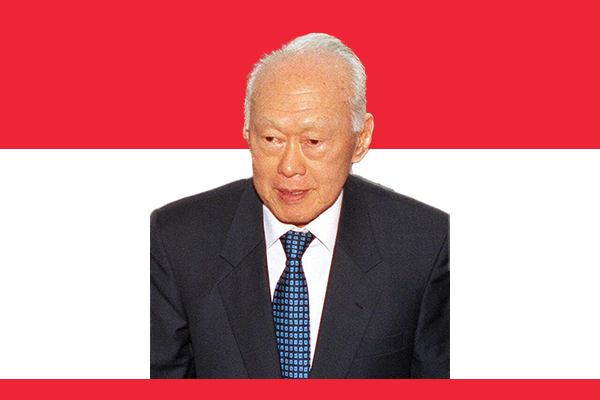
Early Life and Education
Lee Kuan Yew was born on 16 September 1923 in Singapore, which was then a British colony. He came from a well-educated family and showed academic excellence from a young age. After completing his early education in Singapore, he studied law at the University of Cambridge in the United Kingdom. His exposure to Western legal systems and democratic ideals strongly shaped his political thinking and leadership approach.
Entry into Politics
After returning to Singapore, Lee Kuan Yew began practicing law and became actively involved in politics. In 1954, he co-founded the People’s Action Party (PAP) with the aim of ending colonial rule and improving the lives of ordinary citizens. His sharp intellect and powerful speeches quickly made him a prominent political figure. In 1959, when Singapore gained self-governance, Lee Kuan Yew became its first Prime Minister.
Leadership and Governance
Lee Kuan Yew believed in strong governance, rule of law, and long-term planning. He emphasized meritocracy, discipline, and integrity in public service. Under his leadership, corruption was strictly controlled, and government institutions were made efficient and transparent. His policies often involved tough decisions, but they were driven by what he believed was best for national survival and progress.
Economic Transformation
One of Lee Kuan Yew’s greatest achievements was Singapore’s economic transformation. With limited natural resources, he focused on industrialization, foreign investment, and export-oriented growth. He created a business-friendly environment and invested heavily in infrastructure, education, and housing. These efforts turned Singapore into a global financial and trading hub within a few decades.
Social Policies and Nation Building
Lee Kuan Yew placed strong emphasis on social harmony in a multi-ethnic society. He promoted racial equality and enforced strict laws to maintain public order. Education was a major priority, with a focus on bilingualism to preserve cultural identity while ensuring global competitiveness. His public housing policies provided affordable homes to the majority of citizens, strengthening social stability.
Foreign Policy and Global Influence
Internationally, Lee Kuan Yew was known for his pragmatic and realistic approach. He maintained balanced relations with major powers and played an important role in Southeast Asian regional cooperation. World leaders often sought his advice, recognizing his deep understanding of global politics and economics.
Legacy and Death
Lee Kuan Yew stepped down as Prime Minister in 1990 but continued to influence Singapore’s politics until his death in 2015. His legacy remains deeply embedded in Singapore’s institutions and national identity. While his leadership style was sometimes criticized as authoritarian, his success in nation-building is widely acknowledged.
Conclusion
Lee Kuan Yew was a visionary leader who reshaped Singapore through determination, discipline, and strategic thinking. His life and work continue to inspire leaders around the world, making him one of the most significant statesmen in modern history.