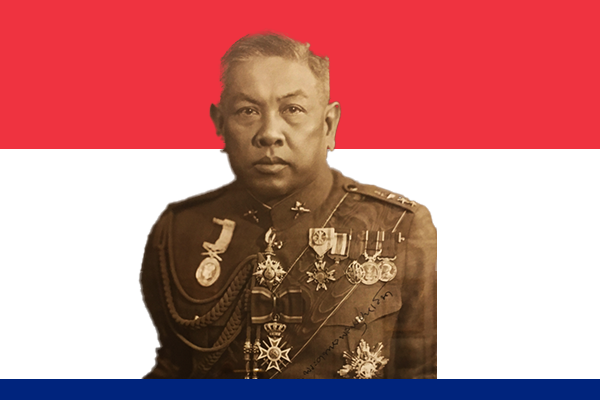
Early Life and Military Background
Phahon Phonphayuhasena was born in 1887 into a military-oriented family. He received formal military education both in Siam and abroad, which shaped his disciplined outlook and strategic thinking. During his early career, he rose steadily through the ranks of the army. His exposure to Western political ideas influenced his belief in constitutional governance and national reform. Rather than remaining a passive officer, he actively engaged with reformist thinkers who sought to modernize Siam’s political structure.
Role in the 1932 Revolution
Phahon played a central role in the 1932 Siamese Revolution, which ended absolute monarchy and introduced constitutional rule. He supported the People’s Party, a group of military officers and civilians who demanded political reform. When internal divisions weakened the revolutionary leadership, Phahon stepped forward to maintain order. He assumed responsibility for protecting the new political system and preventing chaos. His decisive actions helped preserve the revolution’s achievements and ensured continuity in governance.
Rise to the Office of Prime Minister
In 1933, Phahon Phonphayuhasena became Prime Minister during a period of instability and opposition. Instead of ruling through coercion, he emphasized lawful authority and constitutional legitimacy. He worked closely with King Rama VII while also asserting the authority of the elected government. By balancing royal influence and popular governance, he strengthened public confidence in the new political system. His leadership style reflected calm determination rather than authoritarian control.
Governance and Political Reforms
As Prime Minister, Phahon focused on stabilizing Siam’s fragile democracy. He strengthened government institutions and promoted constitutional practices. He resisted extremist influences and discouraged political violence. By enforcing laws consistently, he restored order after years of unrest. Phahon also supported administrative reforms that improved efficiency within the state. His government encouraged civic responsibility and national loyalty, reinforcing the idea that citizens played an active role in shaping the nation’s future.
Economic and Social Policies
Phahon’s administration addressed economic challenges caused by global instability during the 1930s. He supported policies that promoted self-reliance and economic resilience. His government encouraged infrastructure development and improved public administration. While resources remained limited, Phahon prioritized long-term stability over short-term gains. He also supported education and national identity programs, which helped unify society during a time of political transition.
Foreign Relations and National Security
Phahon maintained a cautious and balanced foreign policy. He protected Siam’s sovereignty while engaging diplomatically with major powers. His military background helped him understand the importance of national defense without provoking unnecessary conflict. By strengthening internal security and maintaining neutrality, he ensured that Siam remained stable in a rapidly changing regional environment.
Legacy and Historical Significance
Phahon Phonphayuhasena left office in 1938, but his influence continued long afterward. He laid the groundwork for constitutional governance in Thailand and demonstrated that military leaders could support democratic principles. Historians recognize him as a stabilizing force during a critical era. His commitment to order, reform, and national unity helped shape modern Thailand’s political development.
Conclusion
Prime Minister Phahon Phonphayuhasena actively guided Siam through one of its most transformative periods. Through firm leadership, constitutional commitment, and pragmatic governance, he ensured political stability and national progress. His legacy remains essential to understanding Thailand’s journey from absolute monarchy to modern statehood.