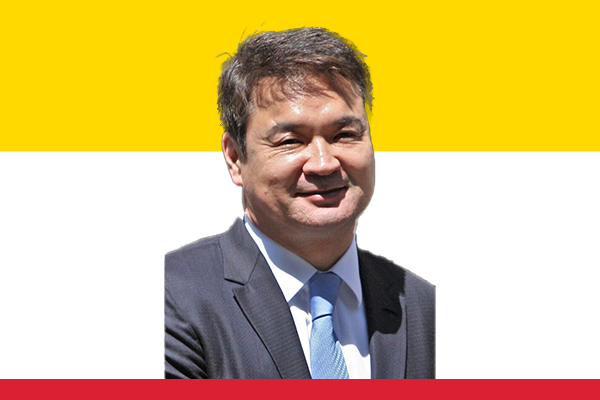
Early Life and Education
Saikhanbileg Chimed was born on January 17, 1969, in Dornogovi Province, Mongolia. He grew up during the socialist era when Mongolia was closely aligned with the Soviet Union. From an early age, he showed strong academic abilities and leadership potential. After completing his basic education in Mongolia, he pursued higher education abroad.
He studied in Russia and later attended George Washington University in the United States, where he earned a degree in public administration. His international education helped him develop a global perspective, which later influenced his political and economic policies. His exposure to democratic systems and free-market economies played an important role in shaping his leadership style.
Political Career
Saikhanbileg began his political career in the early 1990s after Mongolia adopted democracy. He became actively involved in the Democratic Party and quickly rose through its ranks. He served in various government positions, including as a Member of Parliament and as Chief of the Cabinet Secretariat.
His administrative skills and political experience earned him respect among his colleagues. He was known for being calm, practical, and focused on solving problems. His ability to work with different political groups made him a valuable leader during times of political uncertainty.
Appointment as Prime Minister
Saikhanbileg Chimed became Prime Minister in November 2014 after the resignation of his predecessor, Norov Altankhuyag. At that time, Mongolia was facing serious economic challenges. Foreign investment had decreased, economic growth had slowed, and the government needed strong leadership to stabilize the country.
As Prime Minister, Saikhanbileg focused on improving Mongolia’s economy. One of his main priorities was restoring investor confidence. He worked to resolve disputes related to major mining projects, including the Oyu Tolgoi copper and gold mine, which is one of Mongolia’s most important economic resources.
He believed that cooperation with international investors was essential for Mongolia’s economic recovery. His government negotiated agreements to restart major projects and attract foreign investment.
Economic Policies and Challenges
During his time in office, Saikhanbileg introduced several economic reforms. He focused on reducing government spending, improving efficiency, and supporting economic growth. However, his decisions were sometimes controversial. Some people believed that his agreements with foreign companies gave away too many benefits.
Despite criticism, his supporters argued that his policies helped prevent a deeper economic crisis. He worked under difficult conditions and tried to balance national interests with economic realities.
Later Life and Legacy
Saikhanbileg’s term ended in July 2016 after his party lost the parliamentary elections. After leaving office, he remained an important political figure, although he faced legal and political controversies related to decisions made during his time as Prime Minister.
His legacy remains mixed. Some people view him as a leader who helped stabilize Mongolia’s economy during a difficult time. Others believe his policies favored foreign investors too much.
However, there is no doubt that Saikhanbileg Chimed played a significant role in Mongolia’s modern political history. His leadership came during a critical period, and his decisions had a lasting impact on the country’s economic and political development.