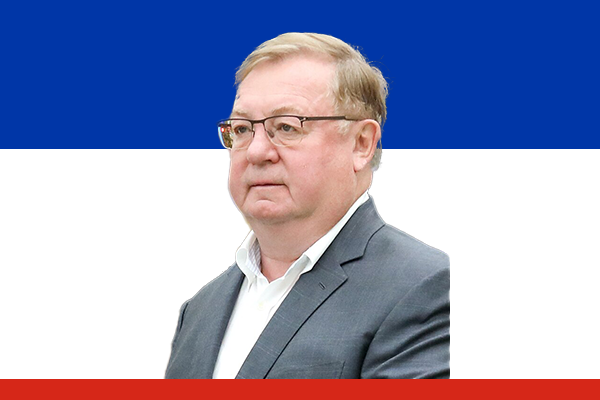
Early Life and Education
Sergei Stepashin was born on March 3, 1952, in Lüshunkou, China, where his father served in the Soviet military. He grew up in Leningrad, where he pursued a disciplined and education-focused life. Stepashin graduated from the Higher Political School of the Ministry of Internal Affairs and later earned a degree in law. His academic background equipped him with deep knowledge of legal systems, governance, and public administration, which later defined his political career.
Rise in the Security and Political Apparatus
Stepashin began his career in the Soviet Interior Ministry, where he worked diligently to manage internal security and law enforcement operations. He joined the KGB’s successor agencies and played a crucial role in reforming Russia’s security structures after the Soviet Union’s collapse. His efficiency and sense of duty helped him rise through the ranks.
During the early 1990s, President Boris Yeltsin appointed him as the head of the Federal Counterintelligence Service. Stepashin actively restructured the service to align with democratic governance and modern security challenges. He also served as Minister of Justice, where he focused on reforming Russia’s judicial and legal institutions, promoting the rule of law during a turbulent political era.
Appointment as Prime Minister
In May 1999, President Boris Yeltsin appointed Sergei Stepashin as Prime Minister of Russia. Stepashin accepted the position with the goal of stabilizing the government and maintaining political balance. His appointment followed the dismissal of Yevgeny Primakov, and Stepashin’s task was to ensure continuity while preparing for upcoming parliamentary elections.
As Prime Minister, Stepashin worked to strengthen the economy and rebuild trust in government institutions. He actively cooperated with ministers and regional leaders to maintain stability in Russia’s financial system after the 1998 economic crisis. His pragmatic approach helped restore investor confidence and reinforce administrative order.
Domestic and Foreign Policy Efforts
Stepashin emphasized efficiency and transparency in governance. He implemented administrative reforms to make ministries more accountable and encouraged modernization within state institutions. His government also pursued moderate foreign policies, aiming to improve relations with Western countries and strengthen Russia’s standing in the global community.
He addressed security issues in the North Caucasus and monitored rising tensions in Chechnya. Stepashin supported preventive measures and advocated for political dialogue instead of immediate military intervention. Although his tenure was short, he managed to keep the situation under control and prevent instability from escalating.
Transition of Power and Later Career
In August 1999, Boris Yeltsin replaced Sergei Stepashin with Vladimir Putin as Prime Minister. Stepashin accepted the decision with professionalism and supported the new government’s transition. His calm response demonstrated his loyalty to the Russian state and his respect for constitutional processes.
After leaving the prime ministership, Stepashin continued to serve Russia in various capacities. He became Chairman of the Accounts Chamber, where he supervised the use of federal funds and ensured transparency in public spending. His leadership in this role enhanced accountability and strengthened financial oversight in government operations.
Legacy and Impact
Sergei Stepashin’s brief tenure as Prime Minister left a lasting impression on Russian politics. He demonstrated competence, integrity, and a deep understanding of administrative systems. His balanced policies, legal expertise, and strong sense of duty helped stabilize the country during a critical transition.
Even after stepping down, Stepashin remained an influential figure in Russian politics and public administration. His career reflects his dedication to national service, institutional reform, and good governance.
Conclusion
Prime Minister Sergei Stepashin may have served for a short time, but his contributions to Russia’s security, justice, and financial stability were significant. His leadership reflected discipline, legal precision, and loyalty to public service — qualities that continue to define his legacy in Russian political history.